We got more traffic before GTA 6. Fine. Did we get more customers?
That is the question I would put at the top of a trend-driven marketing report. A topical hook can win a click. It cannot decide whether the visitor has a relevant problem, whether the page helps them solve it or whether the business can convert the opportunity.
The "we got X before GTA 6" format is an easy opening for content. I would use it only when the rest of the page delivers something the right buyer actually needs.
My approach is to borrow the attention, earn the next step and measure the business outcome. Here is the playbook I would use for an ecommerce brand or a specialized service business.
What newsjacking means in a demand strategy
Newsjacking connects a current event or cultural conversation to a useful, relevant message from your business. The event earns initial attention; your explanation must earn the reader's continued interest.
For this topic, the context is clear. Rockstar's official GTA VI site currently lists November 19, 2026 as the release date. Before that announced launch, the hook is timely. The business value still has to come from the substance of the content.
My distinction is between a topical wrapper and a topical dependency. A useful article about launch planning can open with GTA VI and remain useful after launch. A page with nothing beyond the release countdown loses its reason to exist when the moment passes.
I would build the durable answer first, then choose the hook that gives the intended audience a reason to open it now.
For the underlying brand analysis, read my GTA 6 marketing strategy breakdown. This article is about the next decision: how a business participates without mistaking noise for demand.
Put the hook through three relevance gates
Before writing the headline, I would test three things.
Buyer relevance: does the intended customer have a reason to care about the connection? A marketer planning a launch has a credible reason to examine GTA VI's rollout. A person comparing legal representation is not automatically helped by a gaming reference.
Problem relevance: can I explain a real decision through the example? Strong connections include pre-launch demand, creator distribution, distinctive creative and the gap between views and qualified inquiries.
Offer relevance: is there an honest next step from the analysis to what the business actually does? A launch audit, conversion review or measurement project can follow naturally. An unrelated product link cannot become relevant simply by using a famous logo.
If one of those gates fails, I would change the angle or drop the trend.
| Business context | Useful GTA VI connection | Better next step |
|---|---|---|
| Ecommerce launch | Does the product page support the promise made in the campaign? | A launch-readiness review |
| Marketing consultancy | How does attention progress into qualified demand? | A focused measurement or strategy brief |
| Website project | Does the mobile landing route make the offer clear? | A conversion-focused page review |
| Unrelated service | No meaningful customer decision connects to the game | Choose a more relevant topic |
This is a filter, not a requirement to force GTA VI into every industry's content plan.
Keep the search promise narrower than the hype
Someone searching for GTA 6 gameplay wants gameplay. Someone searching for GTA 6 marketing strategy may want an analysis of positioning, distribution or launch economics. Those are different intents.
I would not use a gameplay-style title to attract people to a consulting article. The resulting traffic can make the analytics look busy while the page disappoints the audience it attracted.
A useful headline tells the reader what the page actually answers. My version connects the cultural hook to a decision: turn attention into qualified demand. The opening then defines the problem without making the reader scroll through a generic history of the game.
The same discipline applies to search and AI-assisted discovery: state the question, give a direct answer, explain the mechanism and cite the evidence. More repetitions of a trending phrase do not make the underlying answer more useful.
Build one destination that completes the argument
A viral post that lands on a generic homepage asks the visitor to reconstruct the connection. I would send the reader to a page that continues the specific promise.
For a launch-readiness article, the page should include the problem, the evaluation framework, examples of the decisions involved and a relevant next step. For a commercial service page, it should explain scope, suitability and how the engagement starts.
The call to action should match the reader's stage. A person learning about the topic may want a checklist or the next analysis. A buyer recognizing the same issue in their business may want to discuss the project.
I would keep both routes clear without making them compete for equal attention in every paragraph.
Before publishing, I test the mobile path: the initial link, page load, heading, reading experience, table layout, contact option and confirmation. A topic with strong distribution potential is a reason to inspect the route more carefully, not less.
That is the work behind conversion-focused website development and customer-journey optimization.
Use Google Trends as context, not a revenue forecast
Google Trends can help identify the timing and relative shape of interest. It does not tell me how much revenue a campaign will produce.
Google's explanation of Trends data says the results are normalized for the selected time and location and scaled from 0 to 100. A score of 100 is not a search-volume total or a market-size estimate. Equal scores in different regions do not imply equal numbers of searches.
My research setup records the search term or topic, geography, period and comparison terms. I would then review whether the associated questions overlap with a real customer problem.
For commercial validation, I want additional evidence from the business: relevant search queries, landing behavior, useful inquiries and completed purchases or sales outcomes.
Do not take a chart shaped like a rocket and turn it into a sales forecast.
Give each stage its own measurement
I would separate discovery, response and commercial quality rather than report all engagement as a conversion.
| Stage | Evidence to inspect | Decision it supports |
|---|---|---|
| Discovery | Relevant landing sessions and observed source context | Whether distribution reaches the intended audience |
| Response | Completed inquiry, demo request or purchase action | Whether the offer earns a meaningful next step |
| Qualification | Fit, problem and readiness confirmed in the commercial record | Whether the response creates a useful opportunity |
| Outcome | Won business or fulfilled orders and their economics | Whether the activity deserves more investment |
For lead generation, I define qualification before launch. That might include the business type, a problem I can help solve, the market served and a practical next step. A longer form is not automatically a better filter; a short inquiry followed by an effective review can work better.
I also separate the event that proves submission from the button that starts it. A click on "Contact" is not evidence that the business received a lead.
Connect analytics to the record that owns the outcome
Google distinguishes Analytics key events from advertising conversions. I would configure the measurement around the business action, not mark every interaction as equally important.
In a lead-generation implementation, an accepted inquiry can generate a generate_lead event. Qualification and a won project belong to later stages, backed by the CRM or the reviewed lead record. A client-side button click should not silently stand in for those outcomes.
I want a stable, non-personal lead reference for reconciliation, clear event deduplication and an agreed definition of what each stage means. Personal contact details belong in the appropriate business system, not in analytics event parameters.
Then document the attribution rule. Google's attribution settings determine how eligible interactions receive credit and include the relevant lookback settings. A first-touch view and a last-touch view answer different questions; I would not switch between them to make a campaign look stronger.
Where consent or browser behavior limits observation, keep the reporting coverage visible. Do not fill a missing source with the most exciting channel name. The business record can still tell you whether an inquiry was useful without pretending every earlier interaction was observable.
My marketing and sales analytics work starts with that connection between the event, the lead and the commercial outcome.
Compare qualified demand, not traffic trophies
Assume two test routes with the following planning numbers:
| Metric | Broad trend route | Focused expert route |
|---|---|---|
| Landing sessions | 10,000 | 2,000 |
| Completed inquiries | 50 | 20 |
| Qualified opportunities | 5 | 8 |
| Content and distribution cost | $1,500 | $800 |
| Cost per qualified opportunity | $300 | $100 |
The broad route wins the traffic comparison. The focused route produces more qualified opportunities at a lower cost in this example.
I would calculate that last row as the defined campaign cost divided by qualified opportunities, using the same cost boundary for both routes. I would then inspect sales outcomes, opportunity value and the cost of delivery before deciding where to expand.
The lesson is not that narrow content always wins. It is that the right denominator changes the decision.
I would also distinguish attributed performance from incrementality. A campaign receiving credit for a conversion does not, by itself, establish that the conversion would not have happened otherwise. Where the scale and setup permit, I would use a sensible comparison or holdout to test additional value.
Build in 24 hours, review over a useful buying window
For a timely expert article, I would keep the production plan compact.
First, write the core answer. Define the buyer question and the useful framework. Verify the factual hook against the original source, including the current release information.
Second, connect the destination. Check the mobile page, internal service links, contact route and measurement. Decide which business record will receive and review inquiries.
Third, distribute to relevant people. Adapt the opening for a small set of channels where the intended audience already engages. A professional post, an opted-in email audience and a relevant partner can do different jobs without requiring three different claims.
Fourth, review quality before volume. Inspect the questions people ask, the route they follow and the usefulness of the inquiries. A seven-day review can identify broken journeys and poor audience fit, while a longer sales cycle may need more time to evaluate won business.
If the content attracts a large irrelevant audience, change the framing before increasing distribution. If the audience is relevant but the next step is weak, fix the page or offer. If the opportunities are good, build the next piece around the questions those buyers actually raised.
Keep the article useful after GTA VI launches
The hook has a date. The analysis should have a longer life.
I would preserve a stable URL, update the launch-status sentence when the facts change and keep the useful framework intact. The page should still answer a marketing question after the event stops being a novelty.
That is why I would rather publish two distinct pieces than ten variations of the same meme: one explains the launch strategy; the other helps a buyer apply a demand framework. Each page has its own question and a clear relationship to the other.
My decision rule is straightforward: use a cultural moment to introduce useful expertise, then make the next commercial step worth taking.
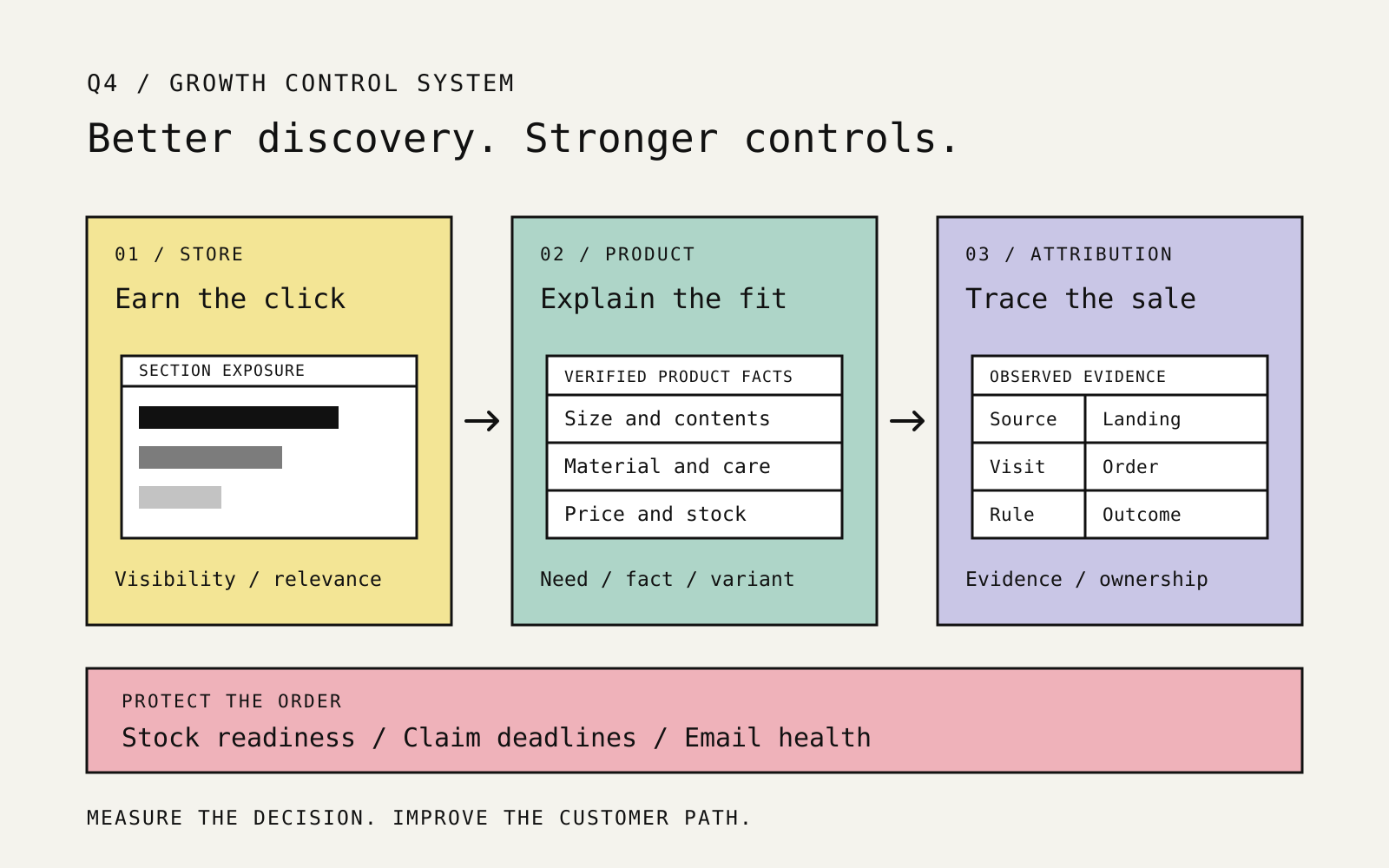
If your campaigns attract attention but the resulting pipeline is unclear, explore my growth strategy audit or discuss your growth challenge. For a related measurement example, read my analysis of AI referral attribution and connected growth controls.
Hype marketing and newsjacking FAQ
Can an unrelated business use the before GTA 6 hook?
Only when the content makes a useful connection to its customer's decision. If the reference distracts from the problem or creates a misleading expectation, I would choose another angle rather than force the trend into the offer.
What should I measure after a topical post brings more traffic?
Review relevant landing sessions, completed inquiries or purchases, commercial qualification and outcomes. Keep the source rules and cost definitions consistent. Traffic growth alone does not establish useful demand.
Does a Google Trends score of 100 mean a large sales opportunity?
No. It is a normalized search-interest value within the chosen comparison. Evaluate the actual buying question, customer fit and business evidence before assigning commercial value to the trend.
Should every form interaction be a primary conversion?
No. Distinguish opening or starting the form from an accepted inquiry. Define the later qualification and sales stages separately so a convenient click metric does not replace the outcome you need.
Source notes
- Current release context: Rockstar Games, official GTA VI site, checked November 7, 2026.
- Search-interest interpretation: Google Trends data FAQ, on normalization, time, geography and the 0-100 scale.
- Measurement terminology: Google Analytics, key events and conversions.
- Credit and lookback rules: Google Analytics, attribution settings.
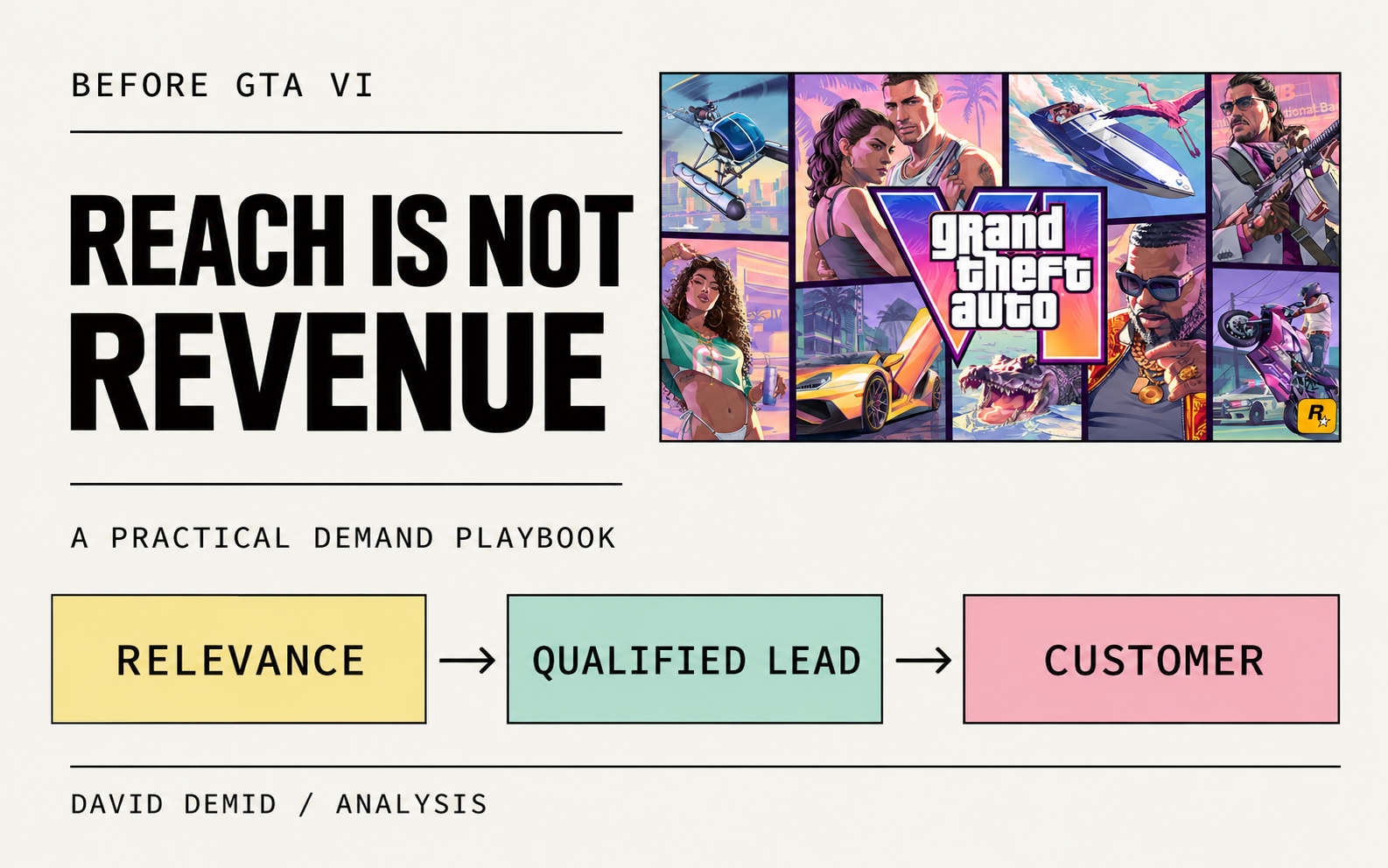
- Cover artwork: Rockstar Games, official artwork downloads, combined with my relevance-to-customer framework. GTA VI artwork belongs to Rockstar Games.