GTA 6 does not have a marketing strategy called "make people wait." It has a product, a recognizable world and an audience with a reason to care. The waiting makes those assets more visible. It does not create them from nothing.
That distinction matters if you are planning a product launch, a new service or an ecommerce campaign. Copying Rockstar's publishing frequency is easy. Building the conditions that make its announcements valuable is the actual work.
Ahead of the announced November 19, 2026 release, I reviewed the public launch material and the original trailer's audience data. My conclusion: the useful GTA 6 marketing lesson is not about posting less. It is about connecting accumulated demand, recognizable creative and a clear commercial next step.
Here is how I read that system, and what I would apply to a business without Rockstar's audience.
The GTA 6 marketing numbers worth understanding
Guinness World Records records 90,421,491 YouTube views for GTA VI Trailer 1 in its first 24 hours, dated December 5, 2023.
YouTube's own launch retrospective also reports more than 250 million views of GTA VI-related videos across December 4-5, 2023. That wider content category includes discussion around the game; it is not a count of extra customers to add to the official trailer audience.
I separate what those numbers tell us:
| Signal | What it shows | What I would investigate next |
|---|---|---|
| Official trailer views | Exceptional attention to a release asset | How that attention progresses toward purchase intent |
| Views of related videos | A wider distribution and interpretation ecosystem | Which audiences and questions that ecosystem develops |
| Pre-order availability | A concrete transaction route | Whether the offer and purchase conditions are clear |
The first two are attention signals. The third is a commercial mechanism. Treating all three as the same kind of success produces bad marketing decisions.
A view is evidence of exposure. A purchase is evidence of a transaction. The strategy must explain the path between them.
The campaign starts before the campaign
My reading of GTA VI starts with accumulated brand equity: familiarity with the franchise, a recognizable creative identity and expectations shaped by earlier games. A new trailer reaches an audience that already has a mental model of what the product means.
That is a very different starting position from a new ecommerce brand introducing an unfamiliar product.
When I review a launch, I ask what the business has already earned. Do buyers recognize the name? Can they describe the product's value without reading the entire landing page? Have previous customers supplied credible proof? Is there a community that will explain the announcement to someone else?
If those assets are weak, a quiet launch does not become premium through silence. It becomes harder to discover.
For a smaller brand, I would build a sequence of useful proof before trying to create a dramatic reveal: a product demonstration, a specific customer problem, a credible comparison and a clear explanation of who the offer serves. Each piece should make the next announcement easier to understand.
This is where brand positioning and launch planning meet. The launch should activate an existing promise, not introduce five unrelated promises at once.
Scarcity amplifies demand; it does not replace it
The tempting takeaway is that fewer announcements automatically create more anticipation. I would reverse the causal story: when people already value the product, an announcement has something to activate.
This is why I reject "zero-budget marketing" as an explanation for a blockbuster launch. A public trailer does not reveal the full cost of product development, brand building, creative production, platform relationships or distribution. Calling the visible upload free is not a useful commercial analysis.
My rule is simple: earn the right to be brief.
A familiar brand may need only a distinctive image and a date. An unfamiliar service may need a clear scope, a relevant example and an explanation of the next step. Compressing the second into the first can remove the information a customer needs to act.
Before reducing publishing frequency, I would check whether the current communication resolves buying questions. Less noise is useful. Less necessary evidence is not.
Distinctive assets make each exposure easier to recognize
The GTA VI visual system gives me a useful creative question: can the audience identify the product before processing a paragraph of copy?
For a brand, I would test this across a few actual placements: the social thumbnail, a creator's frame, a mobile landing screen and a product page. Look for consistent visual cues and a coherent promise, not identical layouts everywhere.
The practical audit has four parts:
- Recognition: the name, color, image treatment or other brand cues remain identifiable at a small size.
- Meaning: the creative communicates the kind of experience or problem the product addresses.
- Continuity: the destination continues the promise made by the ad or creator.
- Decision support: the next screen answers a buying question rather than merely repeat the artwork.
In ecommerce, the last point is where attractive campaigns often become expensive. The ad creates a specific expectation; the product page then opens with a generic brand statement, unclear variation choices or an unexplained offer.
I would rather fix that discontinuity than commission another visual variation of the same unresolved message.
Creators expand the product's meaning
YouTube's retrospective describes an established GTA ecosystem of roleplay, modifications, performance and other creator-led formats. My strategic interpretation is that people do more than redistribute the publisher's asset: they make it relevant to their own communities.
That suggests a better creator brief for a smaller business. Do not make every partner repeat the same slogan. Give the right partners something worth explaining.
For a product launch, that might be a genuinely useful demonstration, a comparison, a test against a specific use case or access to an expert who can answer difficult questions. The creator supplies a perspective; the brand supplies accurate information and a product that can support scrutiny.
I would evaluate the resulting content by the quality of the audience response. Are people asking relevant product questions? Do visitors arrive at the appropriate destination? Does the content attract buyers the business can actually serve?
A large audience reacting to the wrong promise can generate work for the sales team without generating valuable demand.
Pre-orders connect excitement to a transaction
The commercial handoff is not an afterthought. Take-Two's pre-order announcement specified the June 25, 2026 start of GTA VI pre-orders and the launch platforms. The official GTA VI site provides the purchase route alongside the release communication.
My takeaway is about readiness: when you ask people to act, the offer and the destination must be ready for that action.
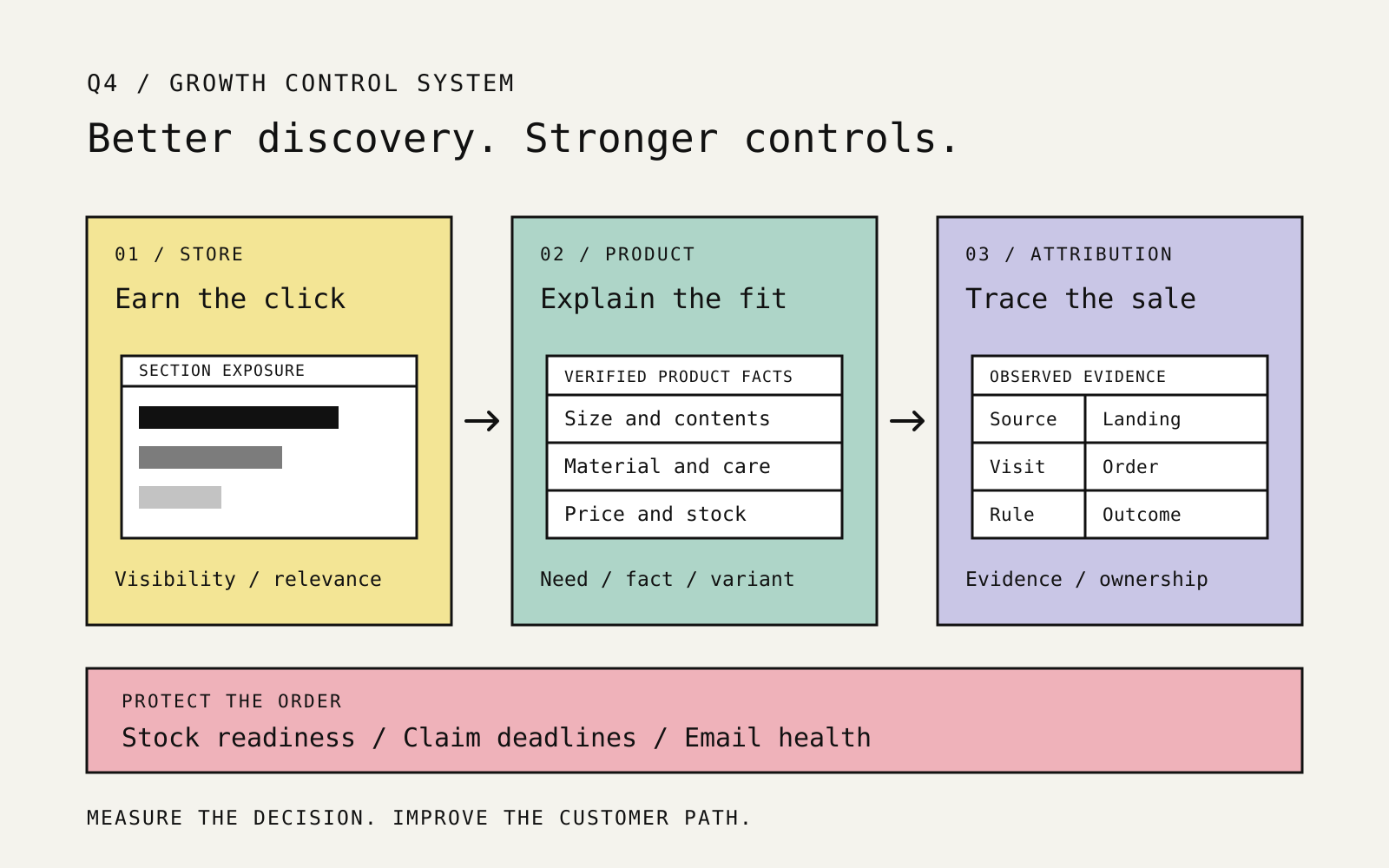
For an ecommerce brand, I want price, availability, variant selection, fulfillment expectations and the checkout path checked before a traffic spike. For a consultant, I want a clear problem, scope and contact route, followed by a response process that can handle inquiries.
An email signup can be a legitimate next step before purchase is available. But it needs a defined reason to subscribe and an actual follow-up plan. "Join the hype" is not enough of a lifecycle strategy.
I would also avoid invented scarcity. Use real availability, actual deadlines and genuine access conditions. A dramatic countdown cannot repair a confused offer.
What I would borrow for a smaller brand
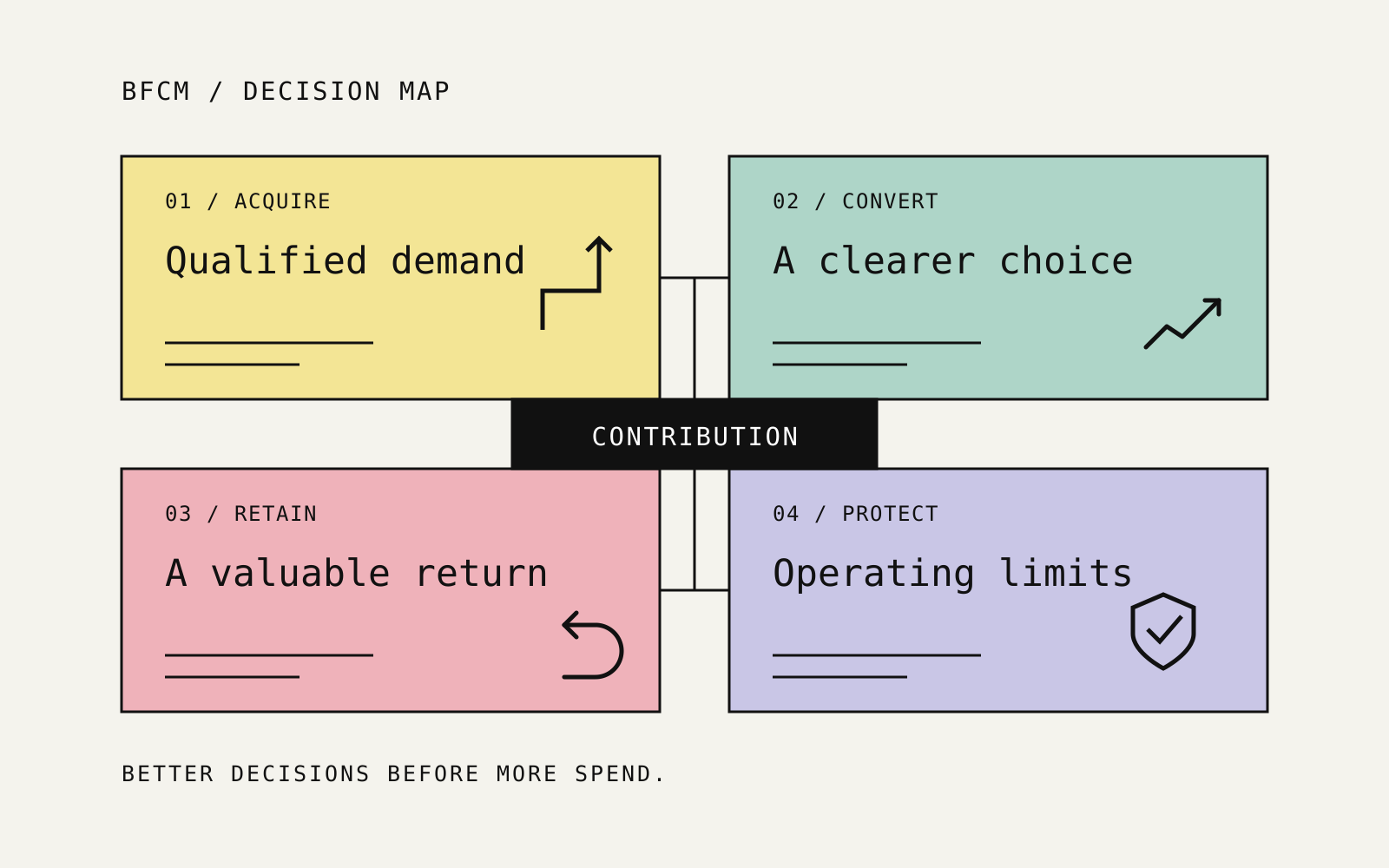
I would translate the GTA 6 marketing analysis into four connected workstreams:
| Workstream | First deliverable | Decision it supports |
|---|---|---|
| Positioning | One buyer problem and a specific promise | Why this launch should matter |
| Product evidence | A demonstration and answers to purchase objections | Whether the promise is credible |
| Distribution | A small set of relevant owned and creator routes | Where qualified attention can come from |
| Conversion | A tested landing and inquiry or purchase flow | Whether interest can become business |
For an Amazon brand, I would connect the external promise to the exact listing or Store route, confirm the relevant variation is buyable and review campaign economics alongside stock. For a service business, I would connect the analysis or demonstration to a page that explains the relevant engagement.
Those are different implementations of the same principle: a launch is a customer journey, not a content calendar.
The strongest small-business version is usually more specific than the blockbuster version. It needs fewer people to understand a more relevant promise. That can be a better commercial target than broad recognition among people who will never buy.
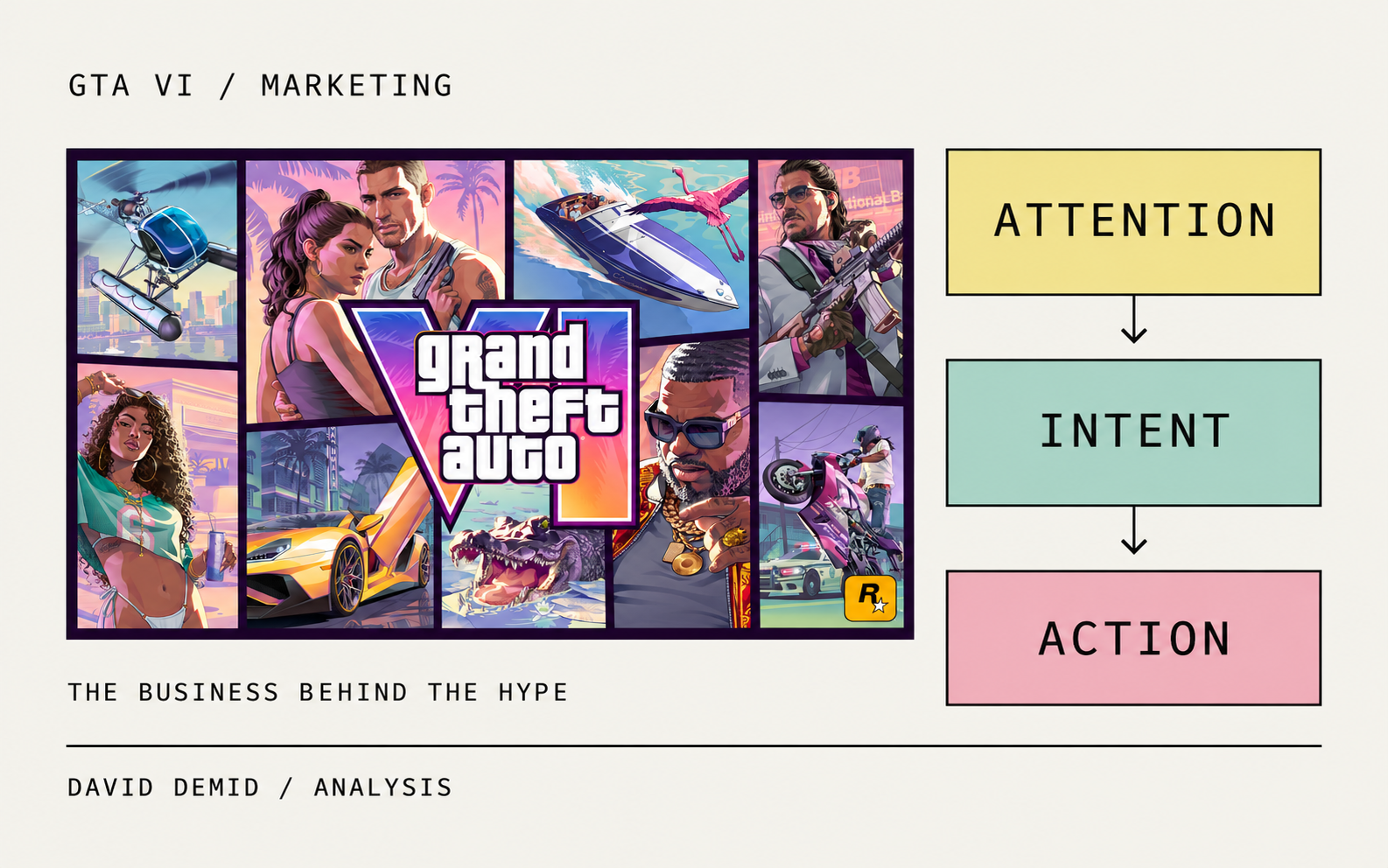
My launch scorecard: attention, intent and action
I would not put every launch metric into a single "hype score." I want three layers with different questions.
Attention: did the intended audience encounter the idea? Review the relevant reach, content response and discovery routes. Use consistent definitions when comparing placements.
Intent: did people take a meaningful next step? Review product exploration, useful inquiries, requested demonstrations or other actions that fit the purchase process. Define what makes those actions valuable before the campaign starts.
Action: did the business receive completed orders or qualified commercial opportunities, and were their economics acceptable? Reconcile the analytics with the system that owns the customer or order record.
I also look at the point where the sequence breaks. Strong attention with weak intent can indicate poor relevance. Strong intent with weak completion can indicate an offer or customer-journey problem. More distribution is not the automatic answer to either.
That diagnostic is the bridge to my practical playbook for turning the "before GTA 6" hook into qualified demand.
What I would do in the next seven days
First, choose one buyer group and the decision the launch should help them make. Write the promise plainly and identify the strongest available evidence.
Next, create one substantial asset: a demonstration, a useful analysis or a product explanation. Adapt its opening and format to a few relevant distribution routes without changing the underlying claim.
Before distribution, test the full mobile route from the creative to the inquiry or transaction. Confirm the destination, offer, form or checkout, source context and response owner.
Then review the first useful signals as a connected journey. Keep the question narrow enough to answer: did this specific message bring relevant people to a destination that helped them act?
The lesson I take from GTA VI is not to imitate the size of the spectacle. It is to make the product, the communication and the commercial route reinforce each other.
If that connection is missing in your launch, explore my growth strategy and marketing audit, conversion optimization or discuss the growth challenge directly.
GTA 6 marketing strategy FAQ
What is the main marketing lesson from GTA 6?
Anticipation works when the audience already has a reason to value the product. I would focus on recognizable positioning, credible evidence, relevant distribution and a working purchase route before copying a low-frequency announcement schedule.
Should a small business copy Rockstar's launch strategy?
Copy the customer-journey discipline, not the publishing frequency or spectacle. An unfamiliar brand often needs more explanation and proof. Its first job is to help a specific buyer understand why the offer matters.
Do trailer views prove a successful sales campaign?
They demonstrate attention to the content. Evaluating commercial success requires purchase or qualified-opportunity evidence, an attribution approach and a view of the relevant costs. I would not substitute views for those business records.
Source notes
- Release and current launch destination: Rockstar Games, official GTA VI site, checked November 7, 2026.
- Original trailer record: Guinness World Records, 90,421,491 views in 24 hours, record dated December 5, 2023.
- Related-video audience and creator ecosystem: YouTube, GTA VI trailer launch retrospective, using the stated December 4-5, 2023 data window.
- Commercial launch route: Take-Two, GTA VI pre-order announcement, June 24, 2026.
- Cover artwork: Rockstar Games, official artwork downloads, combined with my attention, intent and action graphic for this editorial analysis. GTA VI artwork belongs to Rockstar Games.