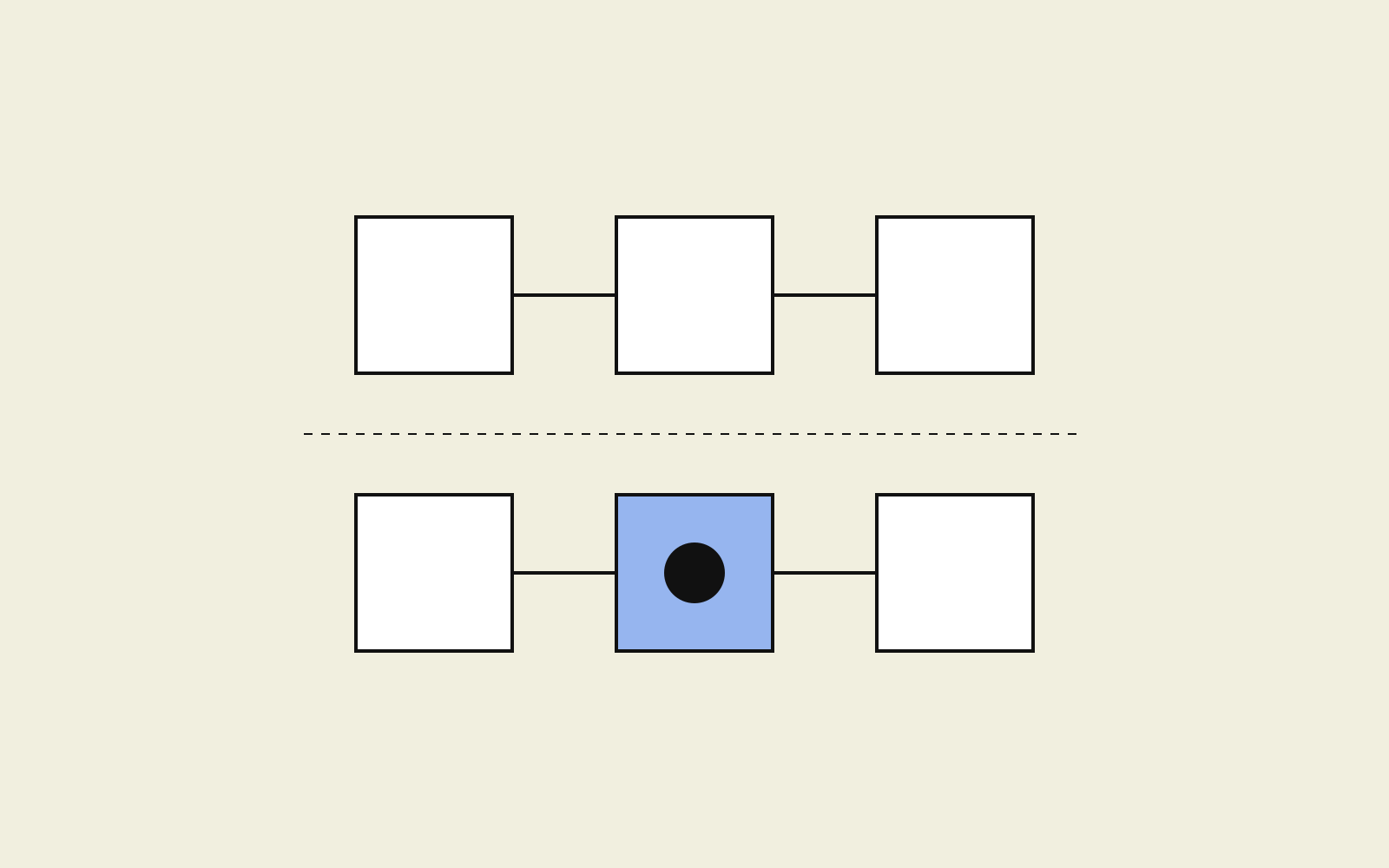
A useful growth test answers three questions: what the platform attributed, what customer behavior changed, and what happened to contribution.
I design tests around a decision the business needs to make. That keeps retail media, email, and creative testing connected to commercial outcomes rather than a collection of impressive platform metrics.
Separate attribution from additional demand
Attribution traces recorded touchpoints and outcomes under a reporting model. Incrementality asks what changed because of the activity.
For retail media, define eligible product groups and the comparison period before changing spend. Use a holdout or a suitable platform experiment where feasible. For a matched-group comparison, record seasonality, product differences, and potential spillover.
Review total sales and contribution in both groups alongside ad-attributed sales. This gives the team a broader view of the business effect.
Test one creative question at a time
If the image, message, audience, offer, and landing page all change together, the team can evaluate the combined campaign but cannot isolate the strongest creative decision.
My preferred starting point holds the product image and audience approach steady while comparing one message: a practical use case versus a verified product benefit, for example.
Set a primary outcome and guardrails before launch. Click-through rate measures interest; completed orders and contribution show what that interest produces.
Resolve the message question first, then test visual treatment. Keep a decision log so the next round starts from what the team learned.
Separate email timing from content
Welcome and abandoned-cart flows contain several independent decisions: timing, offer, product explanation, eligibility, and destination.
For a welcome message, make the offer and code easy to understand on mobile. For a cart reminder, compare a useful product answer with the existing message.
If the question is timing, keep content stable. If the question is content, keep timing stable. Track completion, contribution, unsubscribes, complaints, and the customer experience.
Use a no-reminder control where feasible to assess additional orders. Analyze assigned groups rather than only people who opened the email; opening is a behavior that happens after assignment.
Check new shopping integrations before expansion
Review eligibility, product facts, supported offers, order source, analytics behavior, fulfillment cost, and rollback options.
Start with a small product scope and verify the complete purchase journey. The test needs to capture the order and its economics consistently, even when the customer buys through a new surface.
Define the decision before launch
Every brief should state:
- What result supports expansion.
- What result stops the test.
- What leaves the result inconclusive.
An inconclusive result calls for a clearer comparison or more observations. A result that rejects a weak assumption can still save budget and improve the next decision.
This is the practical value of testing: a growth system that learns which actions deserve investment. See my marketing and sales analytics service for implementation support.
Source notes
- Research — 28 September 2026: retail-media measurement, email experimentation, creative testing, and shopping integrations.
- Further reading: ROAS's First Source of Truth, OUAI Email Tests, and BFCM Creative.