Before I approve more Black Friday traffic, I want to know which offer a customer can actually receive. Not the discount in the campaign brief. The final combination at checkout.
For Amazon sellers preparing for Black Friday and Cyber Monday 2026, this is a coupon stacking and promotion margin audit: find the final discount, calculate what remains and decide which offers deserve more traffic. It is not a shopper's deals roundup.
That distinction matters when a coupon, percentage-off promotion, free-item offer and creator code touch the same product. Each activation can look reasonable on its own. Together, they can create an order the business never intended to subsidize.
In a recent review of US Amazon promotion reporting for November 2-15, I found 277 order lines with multiple promotion identifiers, covering 169 orders and 505 units. Those lines recorded $15,914.92 in gross item sales and $6,022.85 in item discounts: a weighted discount rate of 37.84%. Some three-way combinations reached 57.51%.
My conclusion is not that every stacked promotion should stop. It is that every intentional stack needs an economic reason, a quantity limit and someone responsible for it. An accidental stack needs a different response: identify it, contain it and verify the correction.
1. Find the real discount, not the headline percentage
The reporting example exposes a concentration problem. Multi-promotion lines accounted for approximately 2.9% of gross sales but 31.6% of item promotion discounts in the reviewed dataset. A small share of activity absorbed a much larger share of promotional dollars.
That is why I do not begin with the account's average discount. I group order lines by promotion combination and inspect which overlaps are consuming the budget.
The calculation is straightforward:
Weighted item discount rate = item promotion discounts / gross item sales before those discounts.
For this group, $6,022.85 divided by $15,914.92 produces approximately 37.84%. Averaging the displayed percentages across orders would answer a different question and could give small orders disproportionate weight.
Multiple promotion identifiers are a useful investigation flag, not a complete explanation of checkout behavior. I reconcile the identifiers with the actual order adjustments and promotion settings before changing the offer. Taxes, shipping, refunds and other adjustments need their own consistent treatment.
2. Audit Amazon coupon stacking and promotion overlap
My first deliverable is an overlap map. It connects the product with every offer that can affect its final price: coupons, deals, percentage-off promotions, buy-one-get-one mechanics, audience offers and external codes.
| Review item | Decision it supports |
|---|---|
| Product and variation | Which sellable item receives the offer? |
| Start and end time | Can two activations overlap, including time-zone differences? |
| Audience and claim code | Who can access the combination? |
| Stacking setting | Which combinations are currently permitted? |
| Quantity and budget limits | What is the maximum intended exposure? |
| Owner and stop condition | Who can contain an unexpected outcome? |
Amazon's coupon and promotion guidance explicitly warns about unintentional stacking. I use that as a prompt to inspect the account's live settings, not assume that every promotion type combines in the same way.
I also check the less visible routes. A creator may still be sharing a code after the original campaign ends. A promotion scheduled by another team may overlap a new deal. A code can spread beyond the audience it was designed for.
The operating question is simple: can we explain the final offer for the same item under the customer paths we intend to support?
3. Calculate Black Friday profit after discounts and acquisition costs
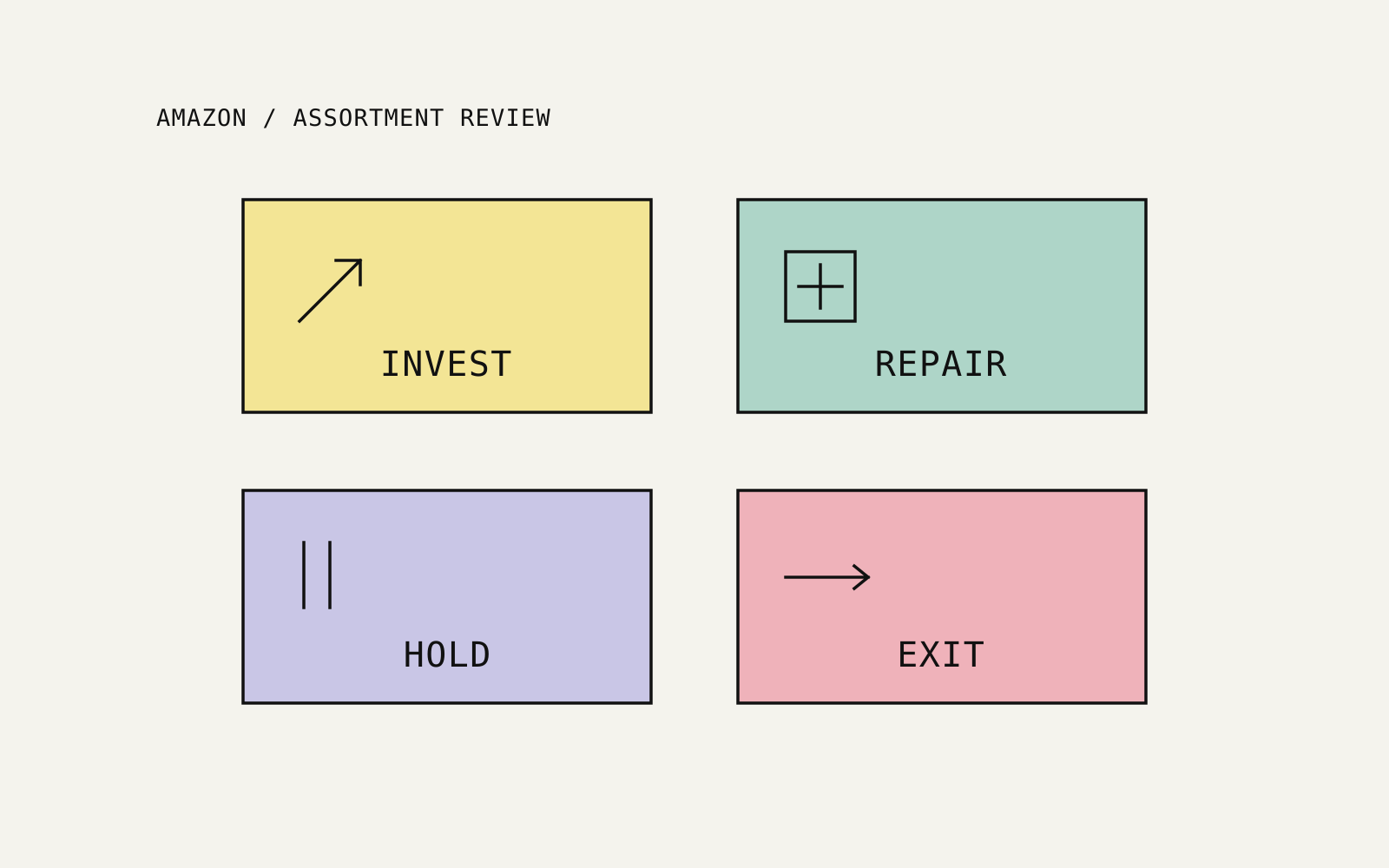
A deep discount can be sensible for a specific stock-recovery objective. It can also destroy the contribution on a healthy product. The percentage alone does not decide which situation we are in.
My objective is profitability, but that does not mean maximizing the margin on every individual unit. Ahead of Black Friday and Cyber Monday, I support controlled promotions that release cash from excess stock while bringing new customers and useful visibility to the offer. Holding that stock also has a cost, so I compare the recovery route with the realistic alternative, not just the original selling price.
The balance matters. In my view, running too many promotions too often can weaken price credibility and teach customers to wait for the next discount. I prefer a defined purpose and event window over permanent promotional pressure. That is a brand-positioning concern, not a claim that Amazon automatically penalizes a seller for offering frequent discounts.
For each proposed combination, I work from the customer payment to the costs that remain: product cost, applicable marketplace and fulfillment fees, promotion costs, creator commissions, advertising and expected return costs. I keep the treatment of each cost explicit so the team does not subtract discounts twice or confuse gross sales with retained revenue.
Consider an illustrative order, not the reporting example above. A product normally sells for $40. After the actual permitted offer, the customer pays $26. If the costs included in the decision total $22, only $4 remains before any excluded overhead. An additional $5 of acquisition cost would turn that order negative on this defined basis.
This is the question I want the marketing and finance owners to answer together: what contribution floor are we accepting for this specific objective?
An acquisition test, a planned inventory exit and a normal replenishable product can have different targets. They should not quietly share the same unlimited promotion settings. My inventory recovery framework covers when selling through stock at a lower margin can be the better decision.
4. Make an intentional stack bounded and reversible
I would not copy another brand's discount ceiling or unit cap. The limit should follow the product economics, available stock and purpose of the activation.
Before launch, record the approved combination, maximum units or budget, expected contribution and action if the result departs from plan. The owner should know which code or activation to pause without dismantling unrelated campaigns.
During the event, I would review:
- The number and value of order lines receiving an unplanned combination.
- Weighted discount by combination, not only the account average.
- Contribution under a consistent cost definition.
- Remaining exposure against the agreed limit.
- Stock cover and the delivery promise for the advertised variation.
Order data and promotion controls can have processing delays. A budget setting is not a substitute for monitoring. Set the review cadence around the potential cost of a leak, and verify the customer-facing result after changing a promotion.
For a broader acquisition and retention plan, use my BFCM growth strategy. This audit has a narrower job: establish which orders the offer is creating before buying more of them.
Publishers and Creator Connections can still be worth activating late
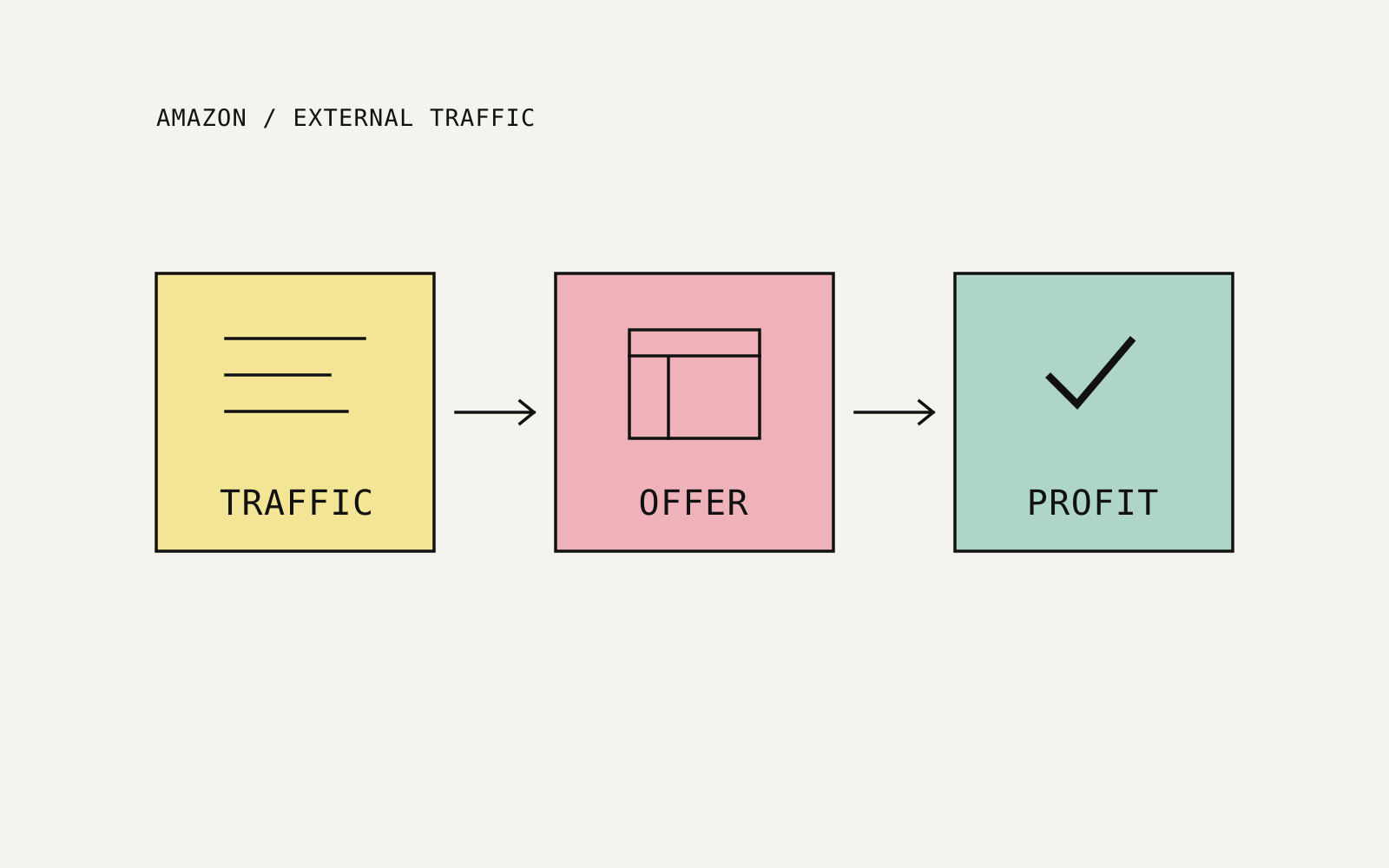
I do not automatically close the external-traffic plan seven to ten days before Black Friday. In my experience, publisher placements and Creator Connections activations can still be worth pursuing one or two days before the event, particularly because Cyber Monday extends the selling window.
The practical requirement is a credible path to a live placement while the offer is available. Prioritize partners who can confirm their timing, products that are in stock and a brief that does not need several rounds of rework. A campaign being available to creators is not the same as a creator accepting it or publishing content.
I have seen publisher articles become discoverable quickly, sometimes the next day. But I separate publication, Google indexing and meaningful search visibility: three days is a possible opportunity, not a guaranteed ranking timetable. Google's crawling guidance makes clear that discovery can take longer. Publisher distribution and a creator's existing audience may provide traffic without waiting for a new article to rank.
Before activating that late traffic, check the final price, promotion overlap, partner commission, remaining stock and the Cyber Monday expiry time together. The goal is more worthwhile orders during the event, not visibility purchased at any cost. My Amazon external traffic plan explains the wider publisher-first approach.
5. Inspect the catalog before sending the event traffic
The same review surfaced a second operational risk: product claims and translations can differ between marketplaces. Cleaning the visible US page does not establish that Canadian or Mexican copy, old records or a connected storefront are consistent.
I would export the relevant catalog records, preserve a backup and compare the source text with regional versions. Check titles, bullets, descriptions and other applicable fields, then identify which system can overwrite an approved correction. Translation automation needs an owner just as much as the original copy.
Claims about antimicrobial protection or pest control deserve qualified review. The EPA's treated-articles guidance distinguishes protecting an article itself from public-health pesticidal claims. I would not treat a generic keyword blacklist as the entire compliance decision.
Nor would I bulk-delete inactive products because a dashboard labels them inactive. Preserve records, review stock and operational dependencies, and use the appropriate catalog process. The goal is approved, consistent product information, not a lower row count.
6. Review low-price distribution without assuming enrollment
Another useful finding was the size of the low-price segment: 311 US products at $20 or below represented approximately $67,097 in trailing 30-day sales. That makes the segment worth reviewing when evaluating additional low-price shopping surfaces.
It does not establish that all 311 products are enrolled in Amazon Haul. Price-band exposure, program eligibility and confirmed participation are three different fields in my review.
For any participating products, compare actual offer terms, fees, fulfillment, visibility and contribution. Check whether the program adds useful demand or changes the economics of existing demand. Confirm the available account controls before making a broad opt-out decision.
This is a distribution decision, not a reason to cut prices across the catalog. A product should earn more traffic through a sound offer, not merely by fitting a price threshold.
7. Put checkout and product evidence ahead of last-minute AI projects
The wider research also covered AI shopping, video discovery, product photography and fraud screening. My BFCM priority is to make the existing buying path dependable before adding a new automation layer.
For a product customers cannot touch, show useful evidence: surface texture, dimensions, fit and the product in use. Directional lighting and demonstration photography should reveal the real material, not exaggerate it. Explain the same specifications consistently on the product page, marketplace listing and approved creator brief.
For direct-to-consumer checkout, review legitimate payment declines alongside chargebacks. A rule that blocks more transactions is not automatically a commercial improvement. Investigate processor responses and reviewed outcomes before weakening fraud controls or sending more traffic into a broken route.
For AI-assisted reporting, keep the calculation outside the model where possible. Let a verified query calculate discounts and contribution; use the model to help explain exceptions. Keep private order details out of public tools and require approval before an automation changes prices, promotions or catalog records.
Useful AI-readable content starts with accurate product facts and understandable answers. I would not delay an urgent promotion fix to write a maximal-length video description or pursue an unverified promise of AI citations. My BFCM conversion guide covers the customer journey that those discovery efforts must ultimately support.
My pre-BFCM release checklist
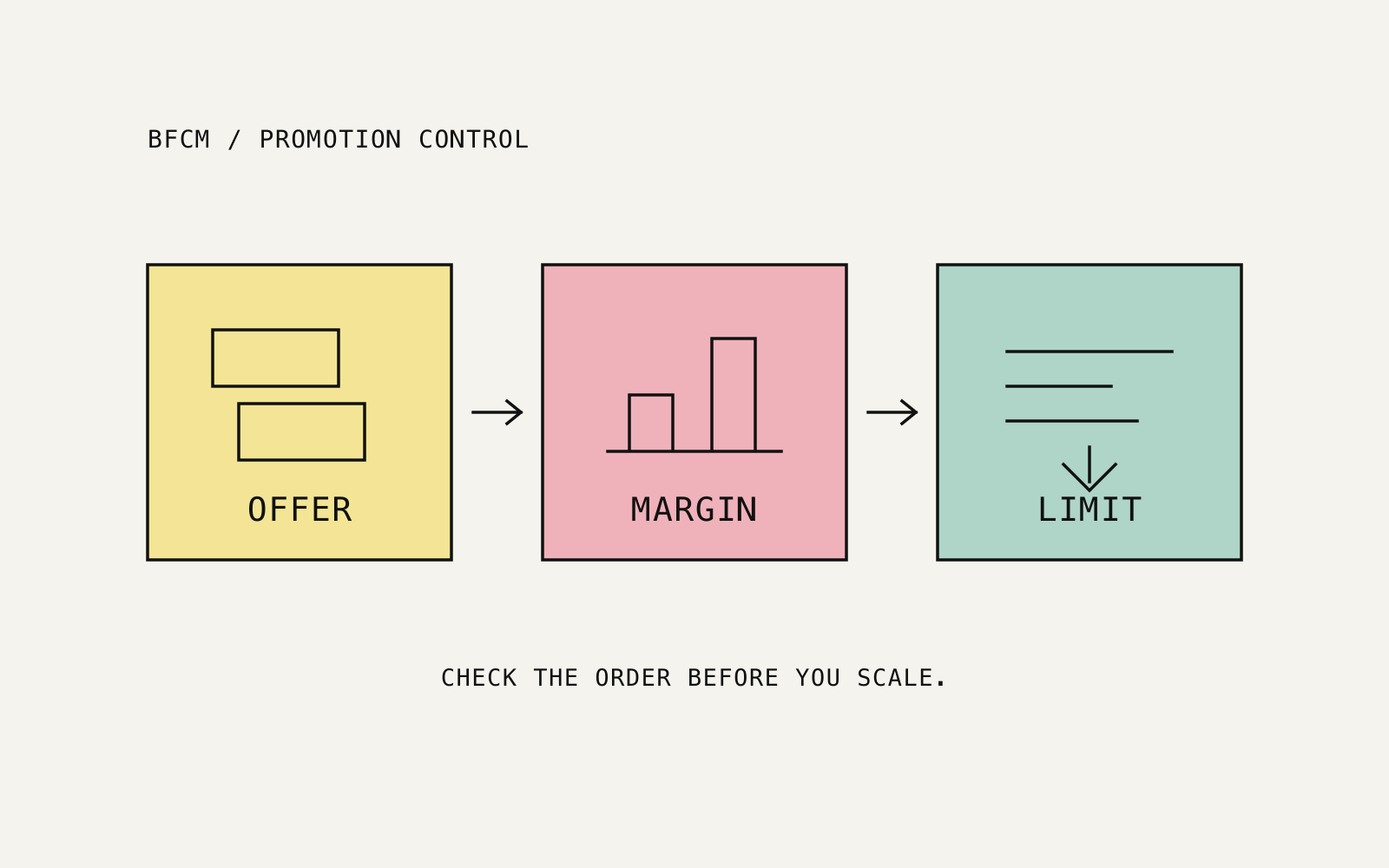
Before increasing spend, I want five decisions recorded:
- Offer: we know which discounts can combine and have checked the intended customer route.
- Economics: the final offer meets the approved contribution objective.
- Exposure: intentional exceptions have a limit, an owner and a stop condition.
- Product: stock, delivery expectations and approved claims match the campaign.
- Measurement: order discounts, acquisition costs and sales outcomes use compatible definitions.
The most valuable last-minute improvement may be removing one accidental overlap, not launching another channel. A campaign scales well only when the order it creates is worth repeating.
Discuss an Amazon promotion and profitability review, or explore marketing analytics consulting and Amazon advertising support.
Amazon promotion stacking FAQ
Can Amazon coupons combine with other promotions?
They can, depending on promotion types, eligibility and the applicable settings. Inspect the live configuration and actual order adjustments rather than assume one universal stacking rule.
Should I stop every promotion with a large discount?
No. Judge the final contribution, objective and maximum exposure. A bounded stock-recovery offer can be intentional; an uncontrolled overlap requires a different decision.
Is the 37.84% figure the discount across the entire account?
No. It is the weighted item discount for the reviewed group of order lines carrying multiple promotion identifiers. Keeping that group visible is what makes the audit useful.
Source notes
- Research as of November 17, 2026: promotion reporting for November 2-15 and a November 16 product-price review inform the numerical examples. The approval workflow and priorities are my analysis.
- Promotion mechanics: Amazon's coupon costs and budgeting guidance.
- Product claims: EPA guidance on pesticide-treated consumer products.
- Distribution: Amazon Haul Distributed Fulfillment documentation; confirm the current terms and participation in the relevant account.
- Publisher discovery: Google Search Central on crawling and indexing requests.