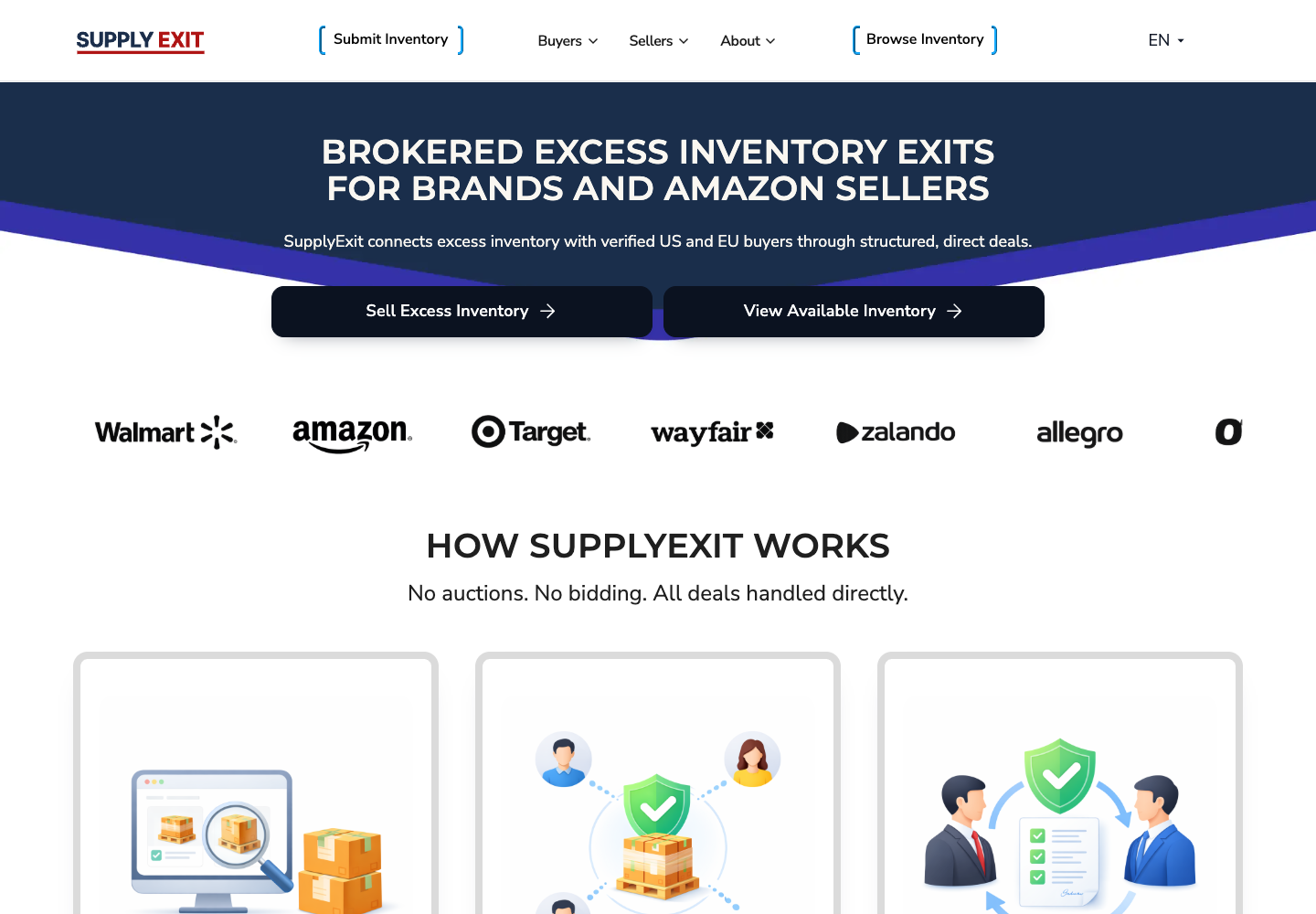
DavidDemid.com - a complete consultancy platform
I designed and developed my consultancy platform end to end: positioning, responsive pages, reusable sections, an editable CMS and a clear path from expertise to a project conversation.
- Client
- DavidDemid.com / my own consultancy platform
- Period
- Current project build / documented 8 October 2026
- Contribution
- End-to-end website strategy, UX, visual design and development
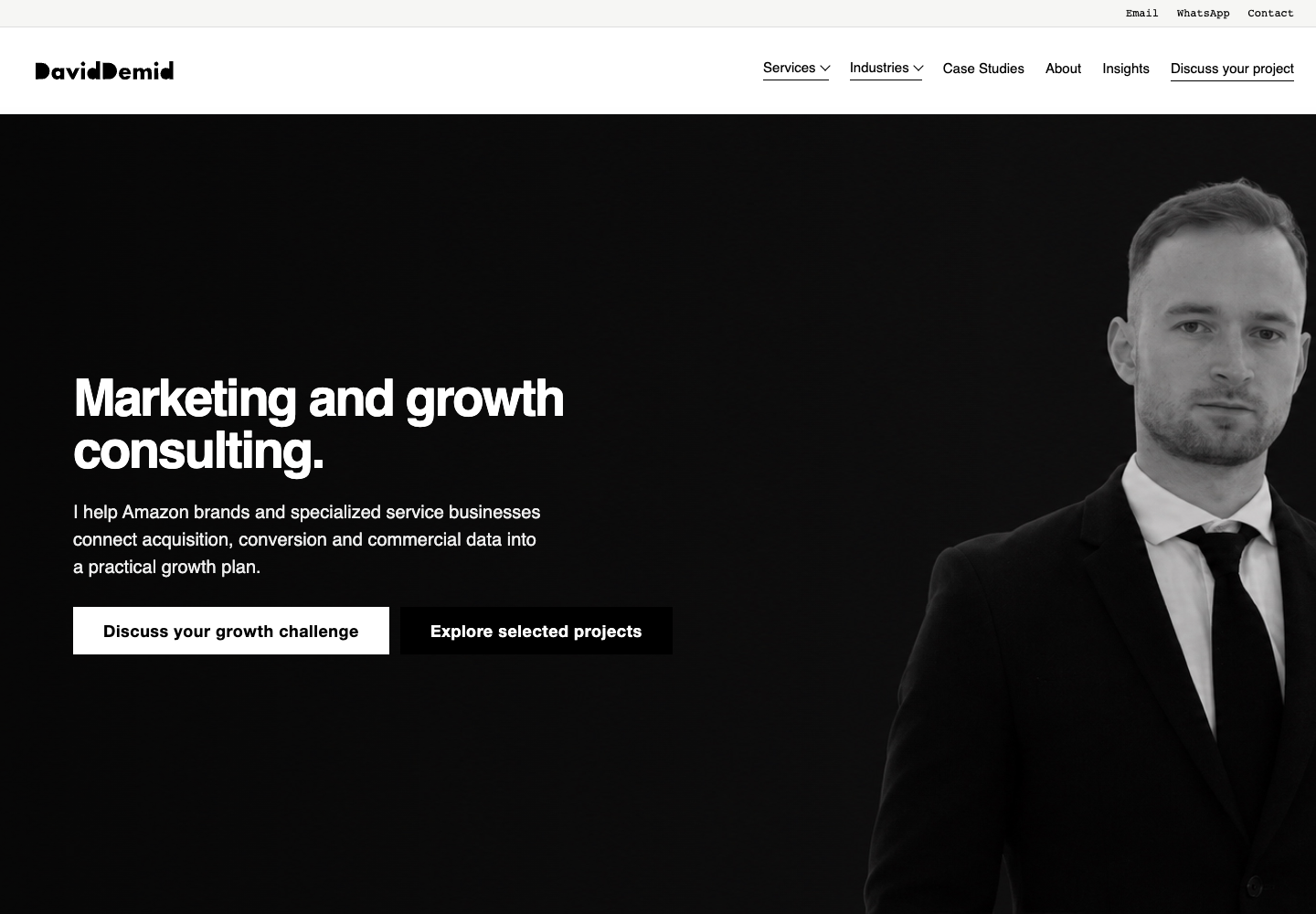
Delivered result
A complete responsive consultancy website with structured service pages, case studies, insights, reusable conversion sections and protected contact-form handling. The current DDN build combines a distinct visual system with schema-driven editing in Netlify Visual Editor.
The result
I built a complete website around the way I work: connect acquisition, conversion and commercial data, then turn that expertise into a clear offer. The result is a reusable content and conversion system spanning services, industries, case studies, insights, about and contact.
I owned the project from positioning and page architecture through visual design, component implementation, content schemas and interaction QA. This case presents the current DavidDemid project developed in DDN.
A clearer route from expertise to a conversation
The homepage establishes the offer quickly, gives visitors two clear next steps and introduces services through distinct color-coded blocks. Each service has its own supporting page, related expertise and a consistent discussion CTA.
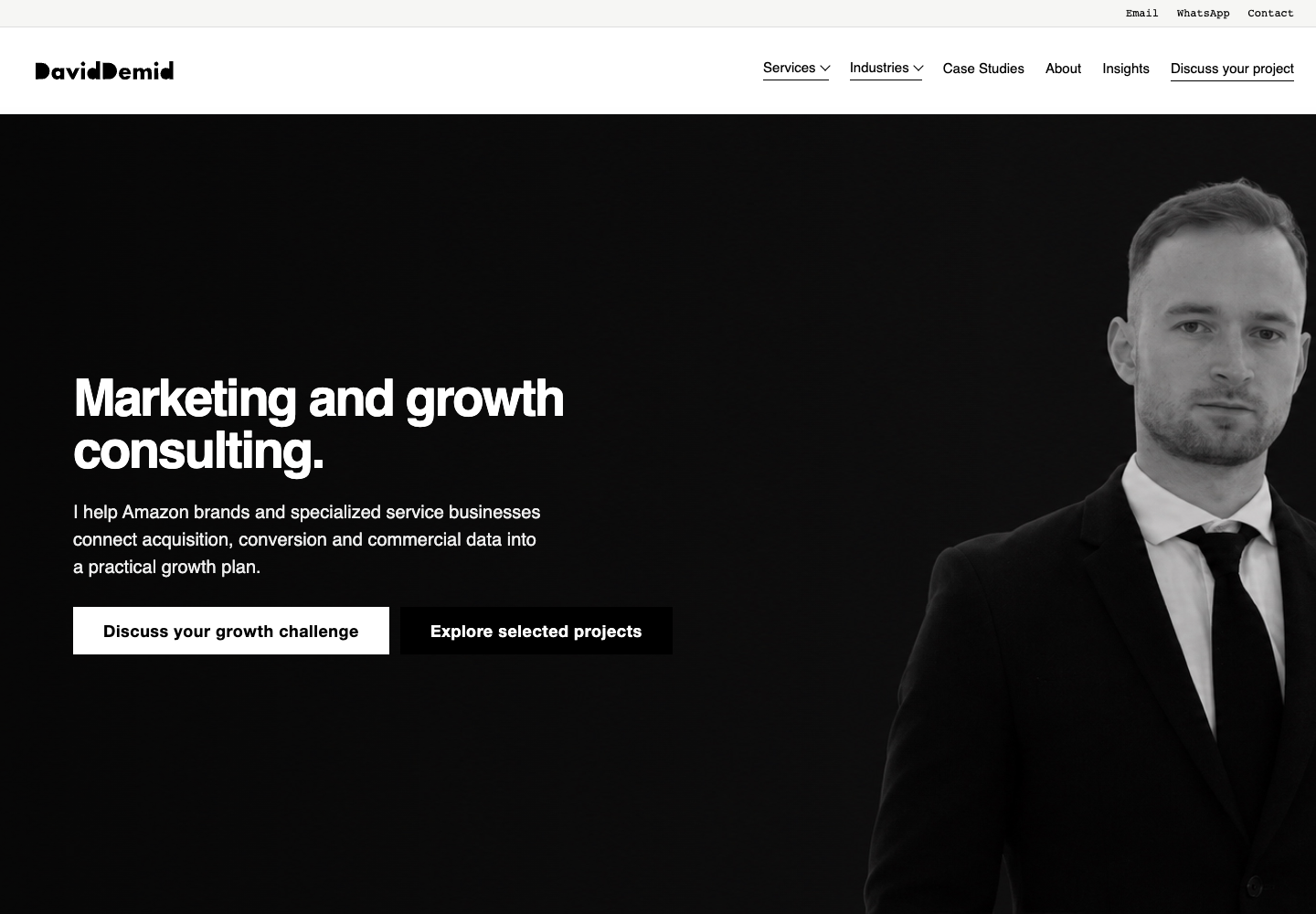
DavidDemid.com desktop homepage, captured on 8 October 2026: positioning, portrait and primary actions.
Cases show project context, my contribution and the delivered result. Insights use a separate editorial structure with dates, sources and a table of contents. Visitors can evaluate the work before opening the contact form, booking a conversation or choosing messaging.
One design system across desktop and mobile
I developed a consistent black-and-white foundation, expressive typography, sharp geometry and selective service colors. Buttons share the same interaction language instead of changing character from page to page.
The mobile experience was designed as its own layout: a right-to-left menu, larger navigation targets, service progress, a readable article TOC near the start of each case, and a contact trigger that appears after the opening screen.
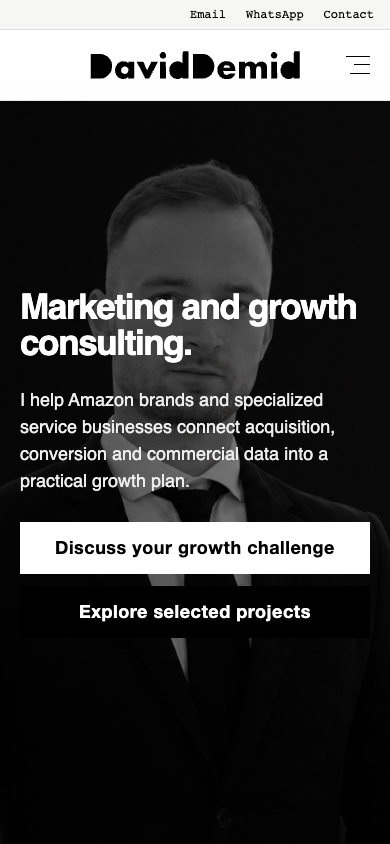
Actual 390px-wide mobile viewport. Content, navigation and portrait framing adapt to the narrower screen rather than shrinking the desktop page.
Reusable service pages and conversion sections
Services use shared components for the problem, approach, delivery and next step. That makes the offer easier to understand and keeps the site coherent as new services are added. The same contact and messaging logic is reused across the site.
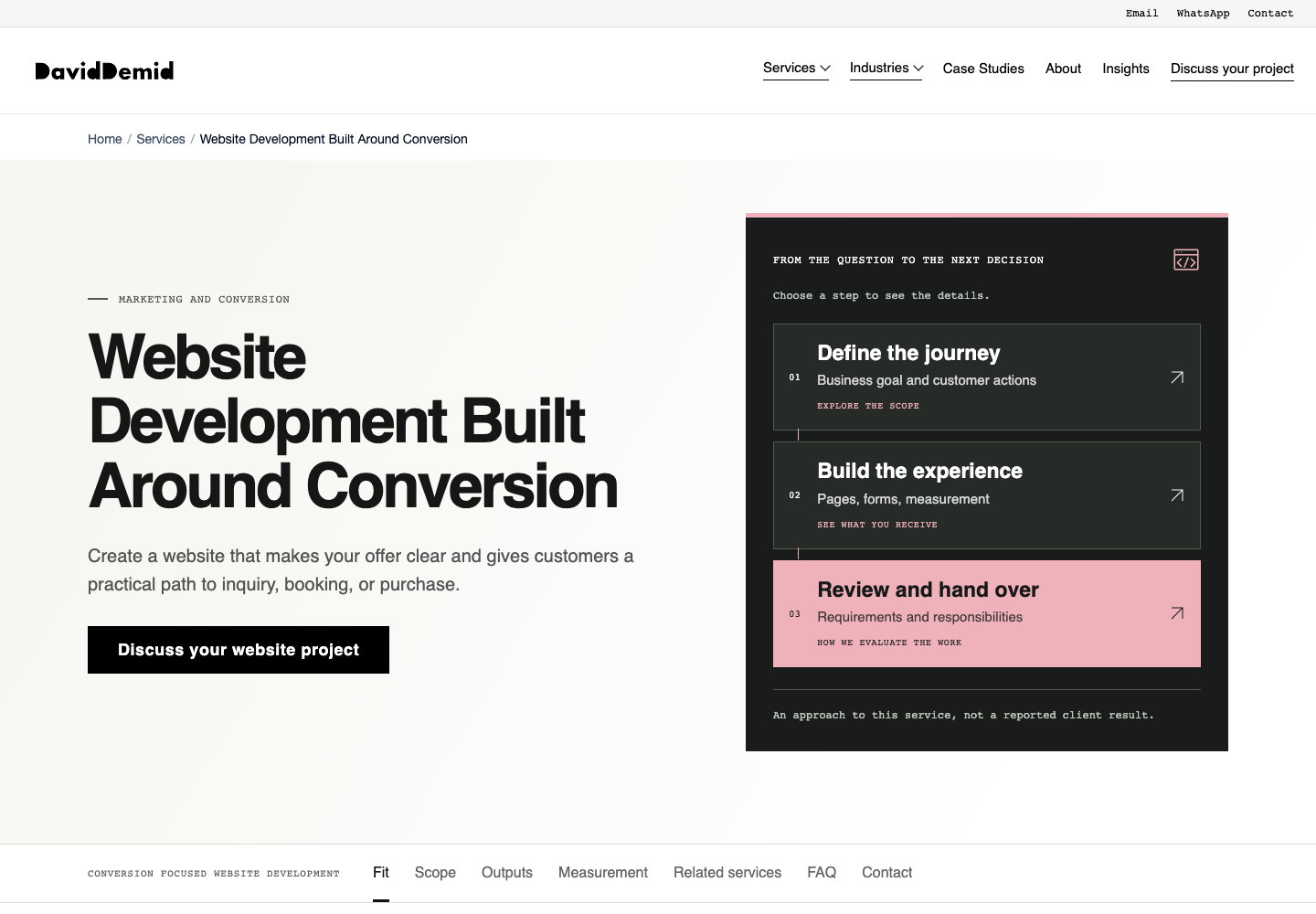
A service page from the same component system. Headlines, supporting copy, actions and section content remain editable.
A website I can keep editing
The technical foundation is Next.js, React, TypeScript and Tailwind, with Git-backed Markdown/JSON content and Netlify Visual Editor. Page layouts, sections, images, links, service data, case metadata and SEO fields have explicit content models and editor annotations.
The result is practical independence: I can revise the offer, replace images, reorder supported page sections or publish a new case without rebuilding the design for each change. Cases derive their table of contents from article headings; collection cards load only the fields they need.
Netlify's Next.js deployment integration is configured in the project. Git CMS powers this website's content; my SupplyExit project combines Sanity with Git-backed visual editing.
Contact handling and implemented safeguards
Contact submissions go through a server-side API with a field allowlist, email and metadata validation, length limits, honeypot handling, repeated-submission checks and basic per-instance rate limiting. Outbound processing supports a server-side webhook secret. Text forwarded into spreadsheets is protected against formula injection.
The form pipeline combines validated inputs, server-side credentials and spreadsheet-safe processing, giving contact handling a clear technical structure.
What I delivered
- A finished responsive visual and component system.
- Clear service, industry, portfolio and editorial page structures.
- A reusable contact and messaging journey instead of inconsistent page-specific actions.
- Schema-driven editing for content and SEO through Netlify Visual Editor.
- Server-side form validation and abuse controls.
- Route, editor-annotation and desktop/mobile layout checks.
The achieved outcome is an implemented, maintainable consultancy platform: a consistent offer, a recognizable design and a content system I can keep developing without losing visual coherence.
Related expertise
Website development, Brand positioning and Conversion optimization.
Current DavidDemid.com project build, captured on 8 October 2026: responsive pages, reusable sections, visual content editing and server-side contact-form safeguards.