SupplyExit.com - a B2B inventory platform
I designed and developed SupplyExit as a complete B2B website: separate seller and buyer journeys, a structured inventory catalog, inquiry flows and a hybrid Sanity / Netlify content system.
- Client
- SupplyExit.com / my own B2B inventory project
- Period
- Current project build / documented 8 October 2026
- Contribution
- End-to-end website concept, UX, design and development
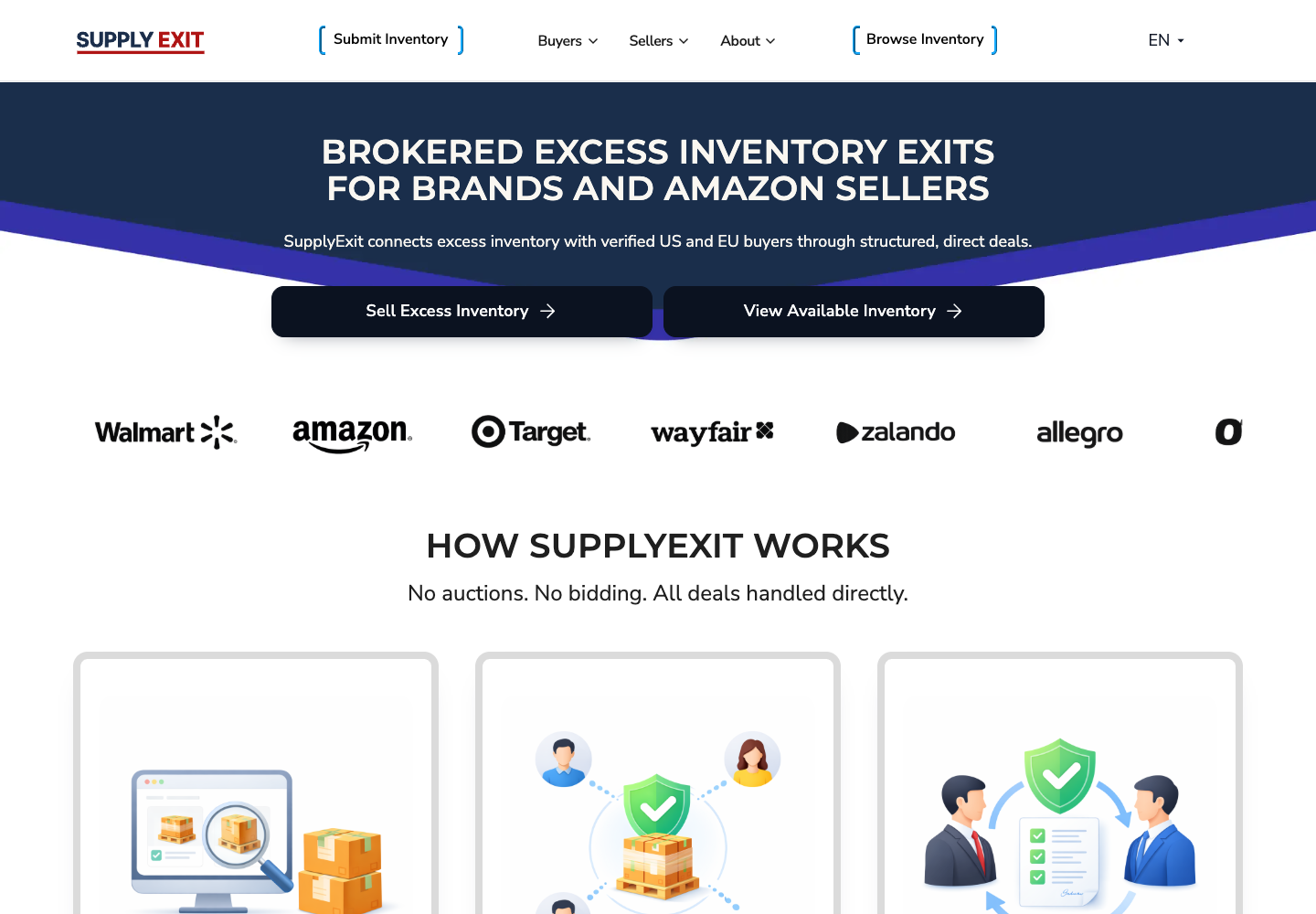
Delivered result
A responsive inventory platform with clear seller and buyer entry points, 25 catalog entries in the reviewed English build, inventory-submission pages, product discovery and a hybrid CMS. Sanity-powered articles and Git-backed visual page editing support different content workflows within one website.
The result
I developed SupplyExit end to end as a B2B website for excess-inventory opportunities. The delivered platform gives sellers a clear route to submit inventory and buyers a separate route to discover available lots and start a conversation.
My ownership covered the concept, page structure, responsive visual design, components, content models and integrations. I delivered a working website architecture that connects the business model with inventory discovery and inquiry flows.
Two audiences, two clear starting points
Sellers and buyers arrive with different questions. Sellers want to explain what stock they have and understand the process. Buyers want to browse relevant inventory and evaluate an opportunity. I made those journeys explicit in the opening screen and navigation.
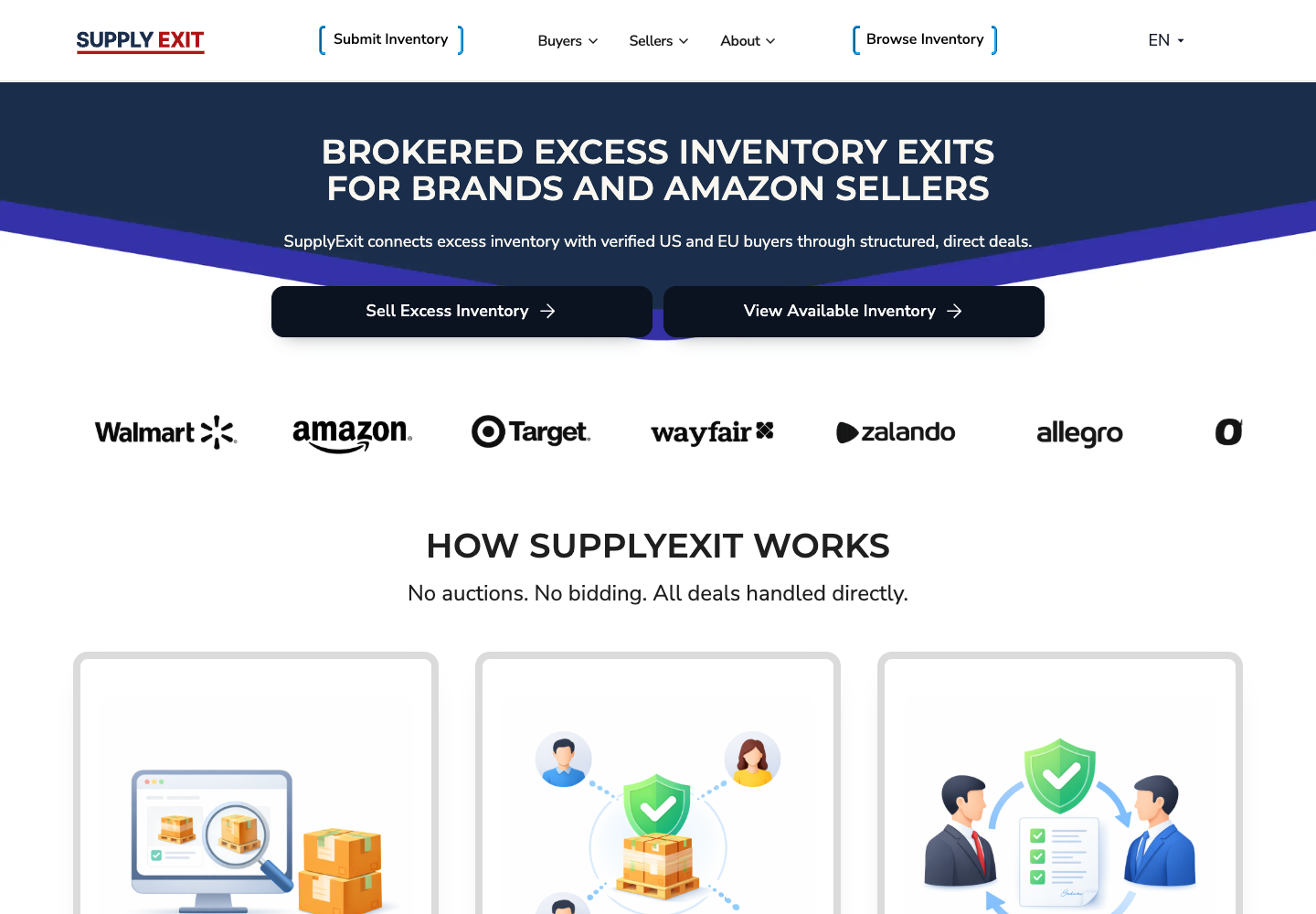
Actual screenshot of the current project build. The first screen distinguishes inventory submission from inventory discovery and introduces the operating process.
The rest of the site supports that split through audience-specific pages, process explanations, product listings and inquiry actions.
Product discovery and inventory submission
The reviewed English build contains 25 catalog entries. Product-feed and detail layouts turn inventory into structured content rather than an unsearchable list of descriptions. Supporting categories, product information and inquiry links give the catalog a reusable foundation.
The seller route explains the next step before asking visitors to provide information. That keeps an inventory submission separate from a general contact request.
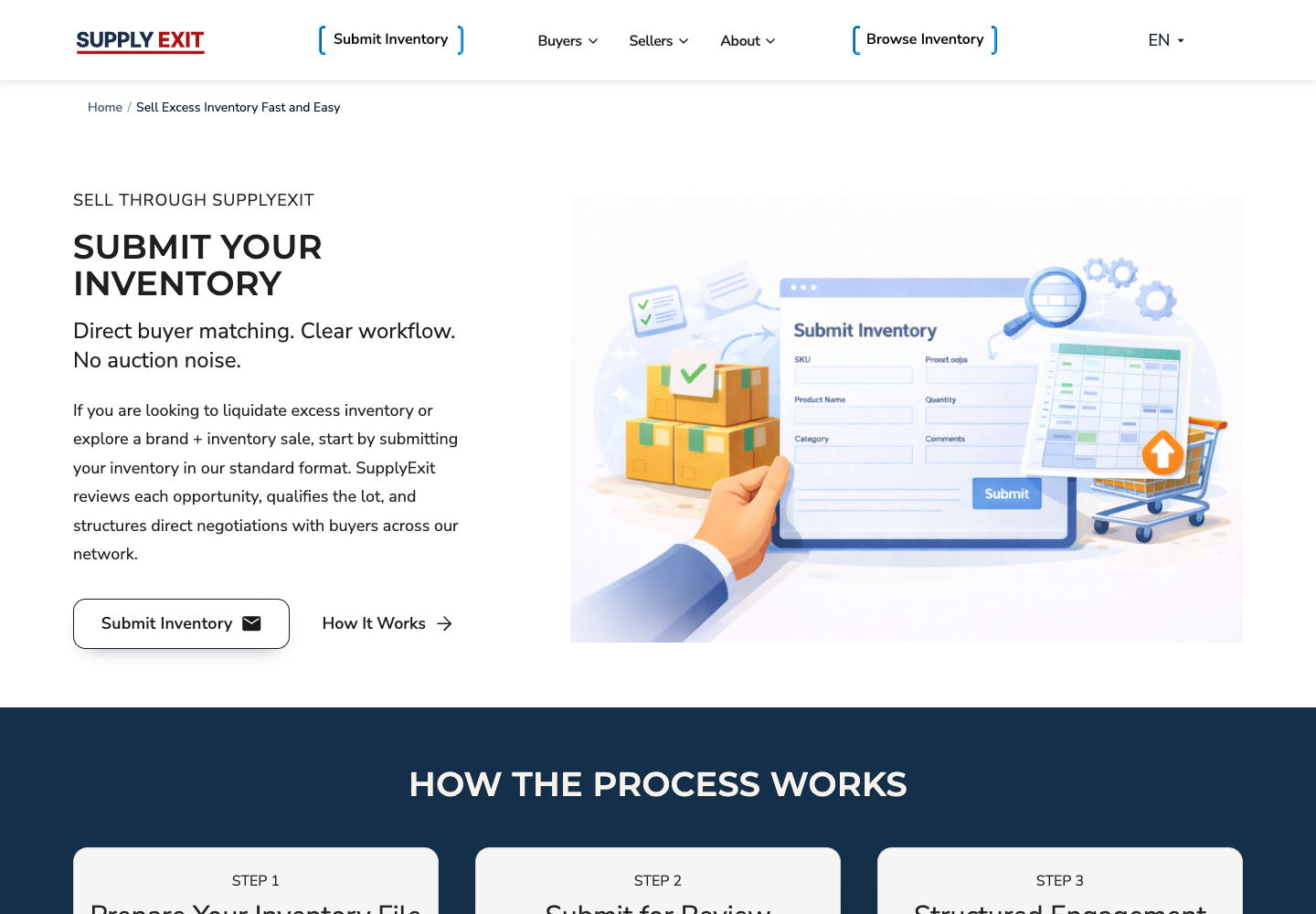
SupplyExit seller page: the inventory-submission journey and its next steps.
A responsive B2B interface
I built the visual system around clear hierarchy, contrasting calls to action and process illustrations. Navigation, page rhythm and content density adapt to mobile, where seller and buyer actions must remain easy to identify.
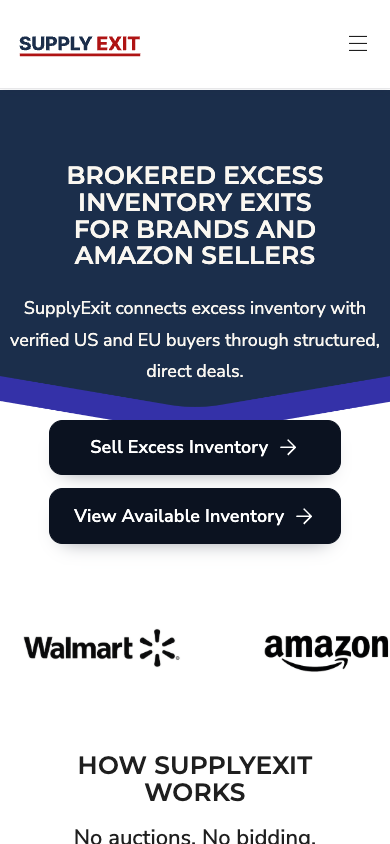
Actual 390px-wide mobile viewport of the local project build.
Sanity and Netlify, each with a clear job
The foundation is Next.js, React, TypeScript and Tailwind. The project combines two editing workflows:
- Sanity: structured articles, author information, images, publication metadata, body content and SEO data.
- Git CMS / Netlify Visual Editor: page layouts, reusable sections, navigation and product content models stored in the project.
The Sanity integration reads published posts, normalizes them into the site's existing article layout and merges them with Git content by route. Drafts are excluded from the published query. Configuration checks and a Git-content fallback keep the rendering layer usable when Sanity is unavailable.
The project includes Sanity Studio configuration and a Netlify Next.js deployment setup. This hybrid architecture means an article does not need the same editing interface as a landing-page section, while both still render inside one consistent website.
Implemented form safeguards
Server-side form handlers validate allowed fields, email format and metadata. Honeypots, repeated-submission checks, basic per-instance rate limiting and spam-pattern handling reduce common automated abuse. The Sanity access token is read from server configuration, rather than supplied by public article-page props.
The implementation keeps form validation and content credentials on the server, with dedicated checks for common automated submission patterns.
What I delivered
- A complete responsive B2B website with distinct buyer and seller journeys.
- Reusable inventory-feed and product-detail structures.
- Dedicated submission, inquiry and supporting information pages.
- A hybrid editorial system using Sanity and Git-backed visual editing.
- Server-side form validation and basic abuse controls.
- An extensible foundation for maintaining inventory and publishing content.
The project demonstrates my ability to connect the business model, UX, visual design and technical content architecture in one implementation. Sellers and buyers now have distinct routes through the website, while the content system supports ongoing inventory and editorial updates.
Related expertise
Website development, US inventory liquidation and US wholesale strategy.
SupplyExit project build captured on 8 October 2026, showing the seller and buyer journeys, structured inventory catalog and hybrid Sanity / Netlify content system.