Before increasing Amazon traffic, check the offer the customer sees: price, selected variation, seller, delivery date, and availability.
Advertising can bring the right shopper to a product that is difficult to buy. The conversion review needs to connect campaign performance with the live buying experience.
Three products with very different conversion rates
A US bedding-business review covered 1–28 August 2026, Pacific time:
| Product | Units | Sales | Unit session percentage |
|---|---|---|---|
| A | 4,781 | $175,510 | 5.05% |
| B | 2,919 | $117,958 | 8.50% |
| C | 1,709 | $59,806 | 15.07% |
Product A recorded 94,586 sessions and 99.01% Buy Box share, yet its unit session percentage was 5.05%. That combination makes the buying experience a priority for investigation.
Unit session percentage is units divided by sessions. It measures a different thing from the percentage of individual shoppers who purchase, because an order can include several units.
The spread between the products helps prioritize the audit. Compare product appeal, price, promotion, traffic intent, and delivery together rather than copying Product C's rate into Product A's target.
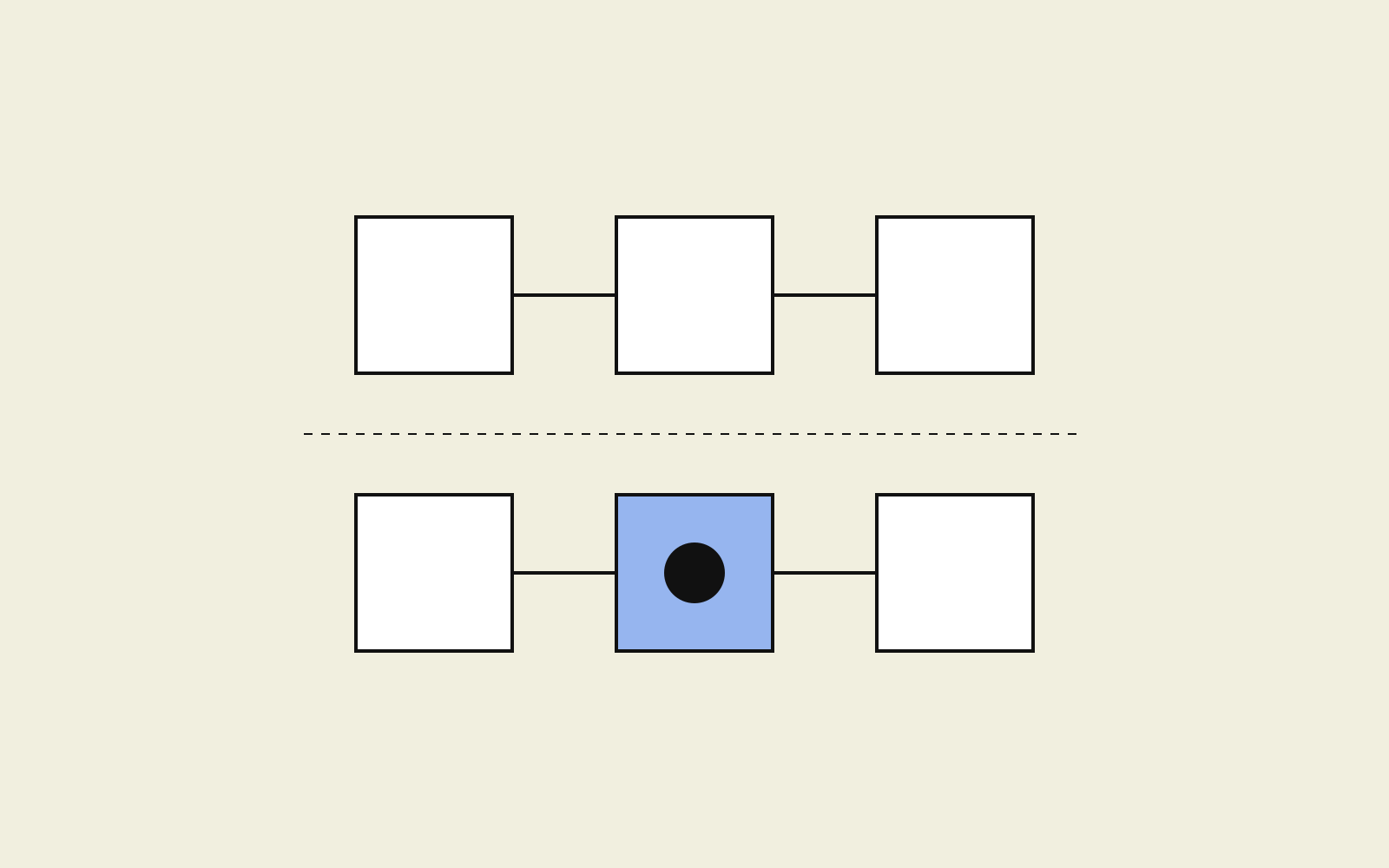
Audit the live offer by location
An account-level Buy Box figure does not show every customer's delivery experience. Check a defined set of locations on mobile and desktop.
For each observation, record:
- Product and selected variation.
- Displayed seller and price.
- Coupon or promotional offer.
- Promised delivery date.
- Available sizes, colors, and alternative options.
- Date, device, and location of the check.
This gives advertising, catalog, and inventory teams a shared picture of what the traffic actually reaches.
Match the comparison to the question
To investigate Product A, compare the same variation over matched windows. Keep a log of prices, stock, promotions, traffic sources, and delivery observations.
Review units, sessions, unit session percentage, revenue, returns, and contribution together. A better conversion rate can come from stronger customer intent, fewer low-quality sessions, or an easier buying experience. The surrounding data shows which explanation deserves further testing.
Make one change at a time where practical. If several changes are necessary, evaluate the combined commercial result rather than assigning the entire change to delivery speed.
Set a measurable improvement target
The August review set 6.50% as a planning target for Product A's unit session percentage, starting from 5.05%.
A useful target needs an observation period, an owner, an acceptable acquisition cost, and a stock plan. Review complete reporting windows and the effect on contribution, not a partial day's rate.
The advertising brief becomes more specific: send qualified traffic to an offer that is available, understandable, and competitive for the locations being served.
Turn the audit into an operating routine
Use recurring offer checks for high-traffic products and add checks when conversion falls, a promotion starts, or inventory changes.
The output should be a short action list: what is wrong, who owns it, what changes, and when the team reviews the result.
For an example of coordinating those decisions, see my bedding product-operations case.
Source notes
- Research — 31 August 2026: child-product Business Report results for 1–28 August, Pacific time.
- Further reading: Competing with Wicked-fast Delivery.